If you’re ever watched the treasure that is the late, great, Bob Ross, you’ll know that there are no such things as mistakes, but rather “happy accidents”. When you stop and look at some of the most iconic things in the world today, that saying actually rings surprisingly true.
Take chocolate chip cookies for example. These were actually discovered in the late 1930s, by baker Ruth Wakefield. It is believed that, having run out of baking chocolate, she instead used pieces of confectioner’s chocolate broken up into small chunks, expecting them to melt evenly. They didn’t, and instead held their shape.
Another fav of mine, Worcester sauce, was also the result of a happy accident when two chemists tried to replicate an Indian sauce for Lord Sandys in the 1830s. The mixture tasted revolting and, after being barrelled up, was then dumped in a cellar and forgotten about for more than a year. When the duo checked it 18 months later, it had fermented and matured into an amazing sauce which is still enormously popular to this day.
It turns out it isn’t just food that can benefit from a happy mistake either. Even in the highly skilled world of professional whisky production, accidents still happen. Some of which even have happy endings.
The Cutty Sark Label Error
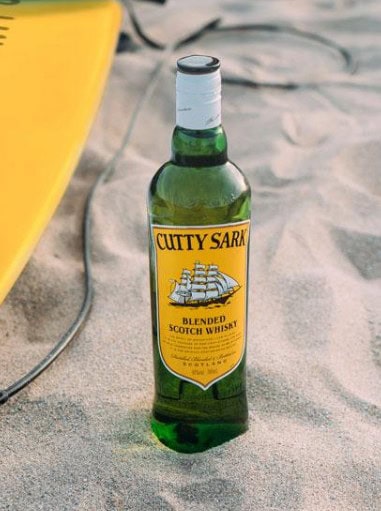
Cutty Sark is a blended Scotch whisky with an incredibly loyal following. It’s often compared to commercial favs such as Bell’s and Famous Grouse, and while it may not have a reputation for being the most refined or decadent dram out there, it’s still very popular.
Having been created back in 1923 by Berry Bros & Rudd, the whisky is perhaps most recognisable due to its now-iconic yellow label depicting the world-famous tea clipper ship from which it gets its namesake.
Today, that yellow label and green glass bottle is recognised around the world and has become synonymous with the brand. It turns out however, that that iconic yellow label was actually a mistake which came about thanks to a printing error. The label was supposed to be printed in a faded cream or beige colour to make it look older and aged. When the labels were printed however, they instead came out in a vivid yellow colour.
Rather than discarding them and starting again, the producers kept the labels and released the whisky. The bright yellow colour really helped the whisky to stand out and proved a hit amongst consumers. Now, more than a century later, that same branding remains. Now that’s the power of advertising!
Forgiving Mistakes
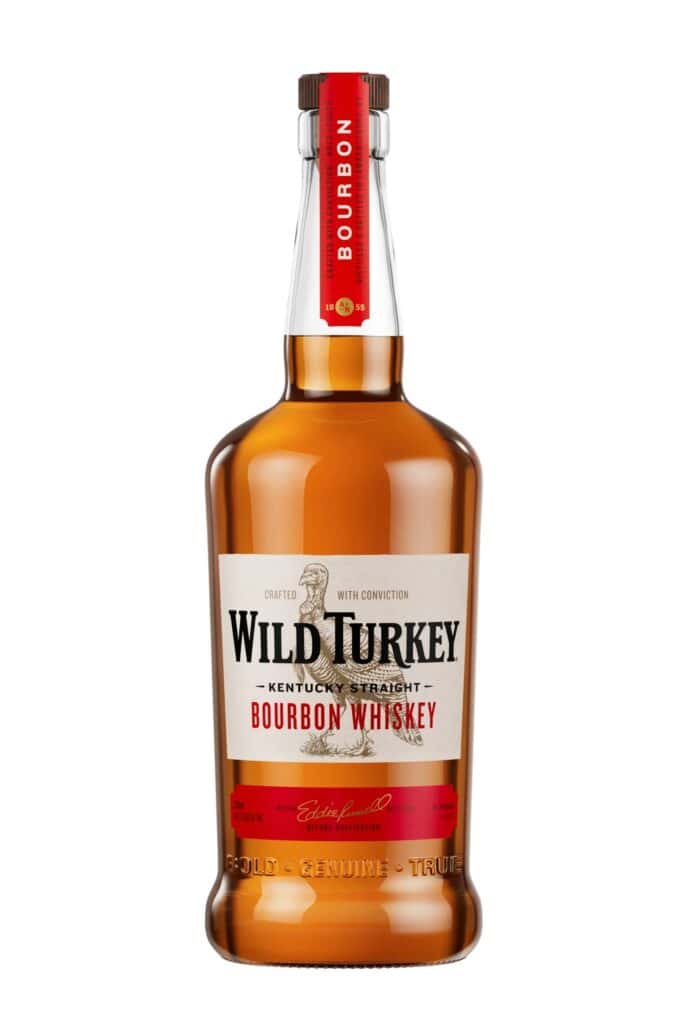
Wild Turkey Forgiven was a very popular blend of rye and bourbon whiskey. It consisted of 78% bourbon and 22% rye and was an instant hit, selling out very quickly.
This limited-edition whiskey was created by accident in 2008 (some reports claim 2010, and even 2013, but that’s the internet for you) when a distillery worker made what would seemingly be a very expensive mistake which would almost certainly cost him his job. When dumping a tank of 6-year-old bourbon, he accidentally used a hose which still held a decent amount of 4-year-old high proof rye whiskey. This of course meant that the two were mixed together.
Upon learning of this, Master Distiller Eddie Russell decided to sample the mixture instead of emptying the whole tank and starting again. He took a sip and was blown away by the different flavours. He promptly forgave the employee for his mistake and went ahead and aged the blend for a number of years before bottling and releasing it.
The whiskey was called ‘Forgiven’ as a nod to the employee being forgiven for his initial mistake.
The Brimstone Resurrection
As I’m sure you’ll have noticed if you’ve ever checked out the blogs here at GreatDrams, I’m a firm believer that bourbon whiskey and barbeque are a match made in heaven. I’m certainly not the only one either.
While whisky over here takes on a smoky flavour from the peat smoke used to malt the barley grains, over in Texas, America, craft distillers Balcones, give their roasted blue corn whiskey a smoky flavour by literally smoking it with American scrub oak post-distillation. This gives their whisky a distinctly sweet and smoky flavour, making it the perfect tipple to enjoy with some traditional Texas BBQ.
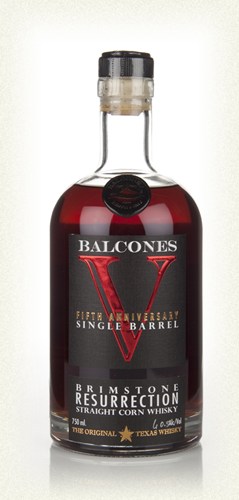
One day in the early 2010s, founder and distiller Chip Tate was working on a batch of Balcones. During the corn-roasting process however, the corn solids caught in the pot stills and were burnt to a crisp. Apparently, the corn grains were so badly burnt that they had to be chiselled from the base and sides of the stills (a bit like one of my Friday night curries after a few too many drams).
After a few choice words, Chip decided to take a gamble and see if he could possibly salvage anything from the distillate. He took what was left of the spirit and smoked it as they would ordinarily, before maturing it in heavily charred oak barrels and bottling at cask strength.
Amazingly, the Balcones blue corn whiskey had been given a new lease on life. The bitter and acrid burnt flavour was gone, and the whiskey had instead taken on a smoky, herbal, charcoal and leather flavour that complimented the caramel, vanilla, and maple syrup notes of the whiskey wonderfully. The whiskey had literally been “Resurrected” so there was only one name suitable.
Balcones Brimstone Resurrection was released in 2013 to celebrate the fifth anniversary of Balcones. It picked up a number of awards, including World’s Best American Whiskey in 2014.
Good Things Come to Those Who…
From the burning heat of Texas to the rugged, weather-beaten shores of Islay, we next have the story of Ardbeg Fermutation.
Even with a distillery as renowned as Ardbeg’s, problems still occur and occasionally equipment does malfunction, as Ardbeg’s Dr. Bill Lumsden discovered in 2007.
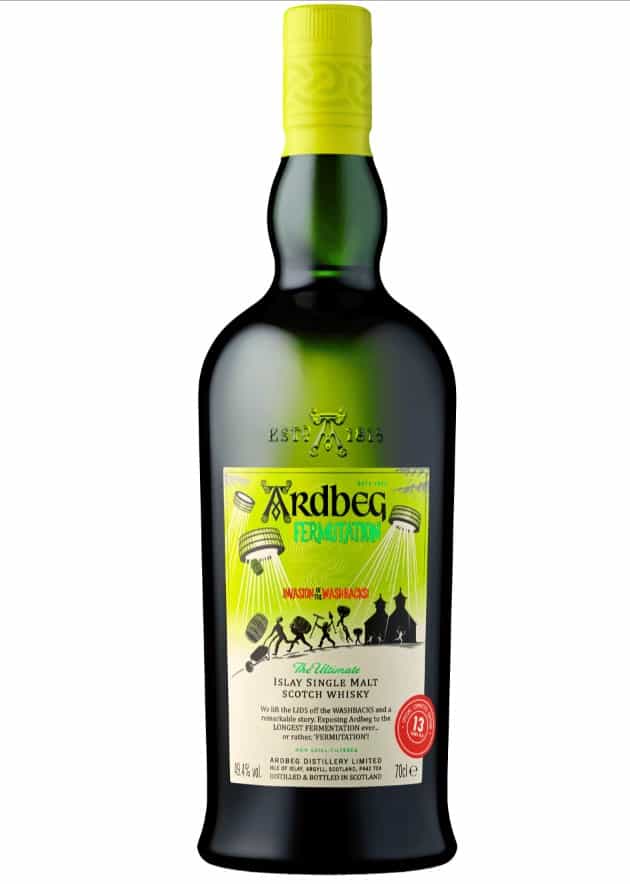
During what should have been the production of a routine batch of Ardbeg whisky, one of the boilers at the distillery broke down, resulting in the longest fermentation in Ardbeg’s history. Three weeks to be exact. Just to give you an idea of how long this is, it typically takes 3 days for a batch of Ardbeg to ferment. Not three weeks!
Rather than binning off a batch of active distillate, the ‘pioneer of wood management’ instead made the bold decision to expose the wash to the elements. He uncovered the tanks for a day and allowed wild microbes in the air to enter the mix, before leaving the contents to ferment for three weeks in total.
This slower fermentation period, coupled with the additional microbes from the air, resulted in a dram unlike anything Ardbeg had ever put out before. The whisky had taken on zingy, tart and citrus fruit flavours, with plenty of aromatic and herbal notes, all balanced perfectly with that signature Islay peat smoke.
Entitled Ardbeg Fermutation, the 13-year-old dram was released in 2022 as a committee-only expression. It has since gone on to win numerous awards and become a highly collectible expression.
Let it Snow
Finally, speaking of long fermentation periods, we have another dram which underwent an extended fermentation period by accident, though I can’t yet say for certain whether this was a happy accident or not.
Earlier in January 2026, much of Scotland experienced heavy snowfall and sub-zero temperatures for several days. At the Cabrach Distillery, located just outside of Speyside, heavy snowfall meant that the distillery was unreachable for longer than a week. As a result, the mash underwent an additional week of fermentation.
Now, as part of a winter break, the distillery had ordinarily planned on a 3-week fermentation (perhaps taking a page out of Ardbeg’s book) but because of the weather, this meant that the wort fermented for 29 days in total.
When the roads were finally clear and the team were able to return, they noticed how the mix had taken on deep tropical and aromatic vibes. It will be released as an experimental one-off, and barring any unforeseen catastrophes, it should prove to be a cracking dram.
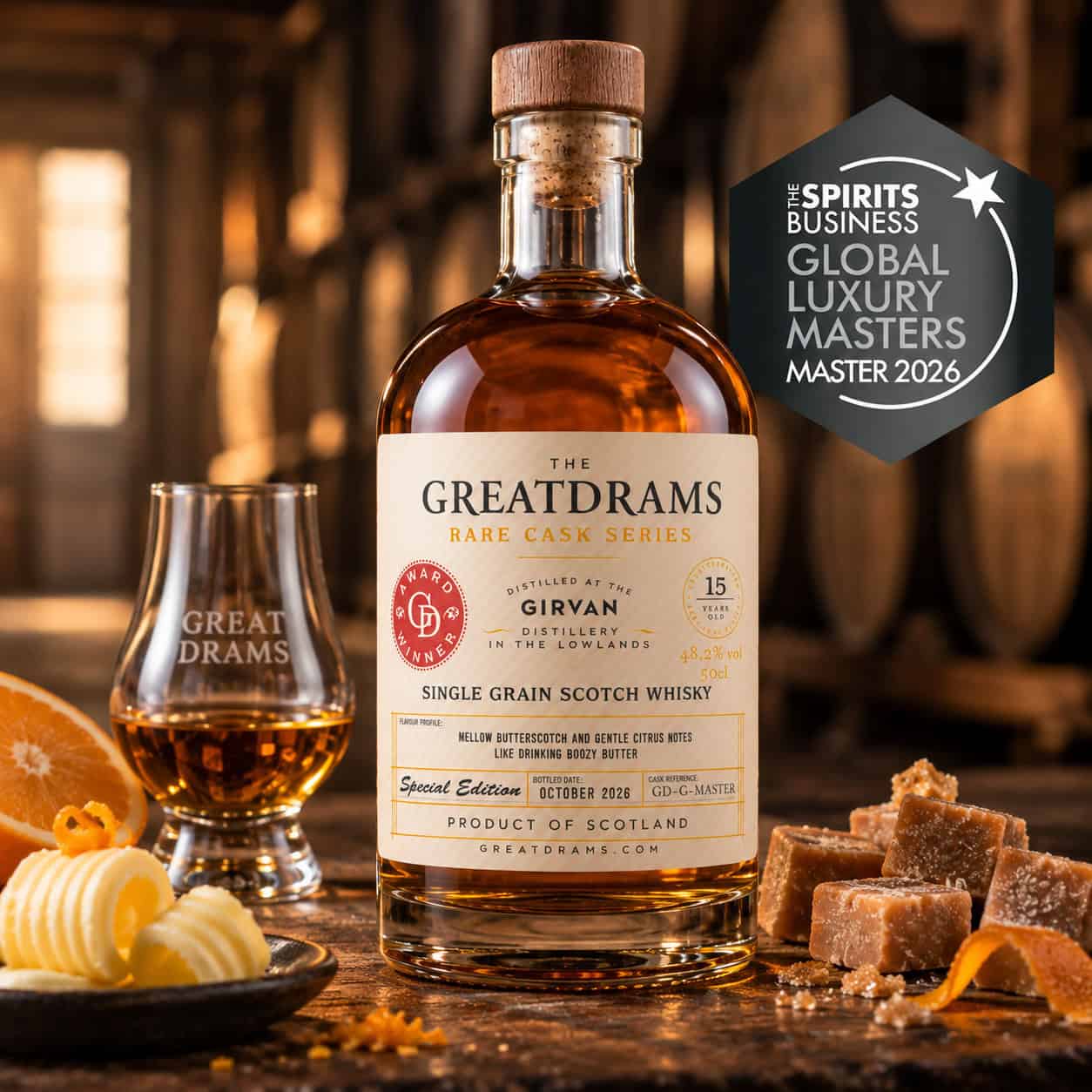
If you’d like to learn more about your favourite whiskies, or simply treat yourself to a dram or two in the process, head on over to GreatDrams.com and take a look at the diverse selection of unique whiskies we currently have in stock.
With an impressive selection of limited-edition, rare, and award-winning whisky, as well as heaps of whisky info on our blog, it’s the perfect spot for any whisky lovers out there.