Good things come to those who wait, and no saying has ever rang truer when it comes to whisky. Whisky straight from the still, also known as ‘new make spirit’ is not only clear as water, but it’s also much harsher, far stronger, and far less refined. Much of a whisky’s flavour profile comes from the aging process and the casks that it matures in. In fact, experts believe that upwards of 70% of a whisky’s flavour and character comes from the cask in which it ages.
While the majority of a whisky’s taste and character comes from the barrel, in order for the wood to impart that “old oak wisdom” that I like to talk about so much, it needs time. One thing that people often overlook when it comes to aging whisky, however, is the surroundings in which the casks are stored.
Of course, when you’re dealing with dozens, hundreds, or even thousands of barrels, you can’t just bung them in the spare room. They need to be stored in specialist warehouses and spaces, and it’s these which I’d like to look at today. Specifically, dunnage houses vs rickhouses.
Dunnage Houses vs Rickhouses – Key Differences
One of the most common misconceptions surrounding whisky maturation is that all whisky storage warehouses are the same worldwide, and simply go by different names, just like with things like taps in the UK and faucets in America.
While there are a number of different types of aging warehouse for whisky, two of the most common, and indeed, the most popular, are dunnage houses and rickhouses. Their sole purpose is to provide a loving and protecting home for the barrels and the glorious whisky that they house as the spirit matures and ages.
Although both dunnage and rickhouses share some similarities and serve virtually the same purpose, the truth of the matter is that they differ hugely from one another, as you’re about to find out.
Rickhouses
First up we’ll take a look at rickhouses, also known as rackhouses.
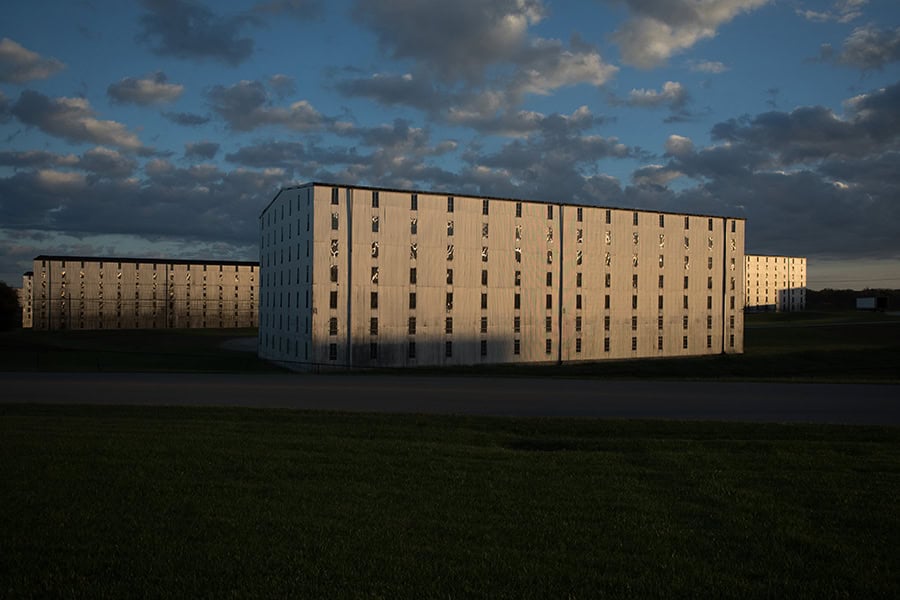
Rickhouses are specially constructed warehouses designed for the sole purpose of aging whiskey. They’re typically designed with convenience in mind, and are particularly common in America. These large warehouses often feature multiple floors and allow distilleries to store their whiskey barrels at least three high (often much higher), horizontally on their sides.
Rickhouses, as they’re known in Kentucky, allow for plenty of room for air to circulate around the barrels to help regulate the temperature. As you probably know, in places like Kentucky and Tennessee, it can be very hot and humid in the summer, yet the winters can be surprisingly cold.
One key way in which rickhouses differ to dunnage houses, is that they can be made from a variety of different materials and come in different sizes with multiple floors. Some may be made from wood and brick, whereas others can be made from natural stone, or even metal. The material a rickhouse is made from can play a huge role in determining how fast a whiskey matures, and how it tastes. Tin rickhouses in Kentucky for example, get incredibly hot during the summer, resulting in a rapid maturation time. It also means more liquid is lost due to evaporation. If the ‘Angel’s Share’ of whisky in Scotland gets the angels nice and tipsy, in Kentucky during the summer, it would get them drunk as a skunk.
Now, as everything is seemingly automated nowadays, it would be easy for the distilleries to install basic climate controls like heaters and air conditioning units, but they don’t, and there’s a good reason for that. In fact, there are several reasons. The first reason is that it would be an extra expense, and an extra headache when the units inevitably broke down at the most inconvenient time. The next reason is that the results simply wouldn’t be as impressive. As great as modern tech is, there’s just no replacing Mother Nature, no matter how hard we seem to want to try.
Experts believe that it is the lack of climate controls and the varying temperature fluctuations that help to make each bourbon so unique and delicious from the last. During the warmer summer months, whiskey in the barrels expands. In the icy cold grip of winter, the liquid contracts. Whiskey stored on higher floors also matures much faster as warm air rises and cold air sinks. This helps to impart all manner of different flavours, notes, colours, and aromas.
A popular misconception when it comes to rickhouses, is that they’re used solely in America, particularly when it comes to bourbon maturation. The truth of the matter is that they’re also now very popular in Scotland. In fact, rickhouses are the preferred warehouses of choice for maturing Scotch. This is again largely due to how efficient they are, as you’ll soon find out.
Dunnage Houses
Now we’re going down the more traditional route and will be taking a look at dunnage houses. These are my personal favs. They’re old school, unassuming, steeped in history, and tried and tested. That’s what I love about them.
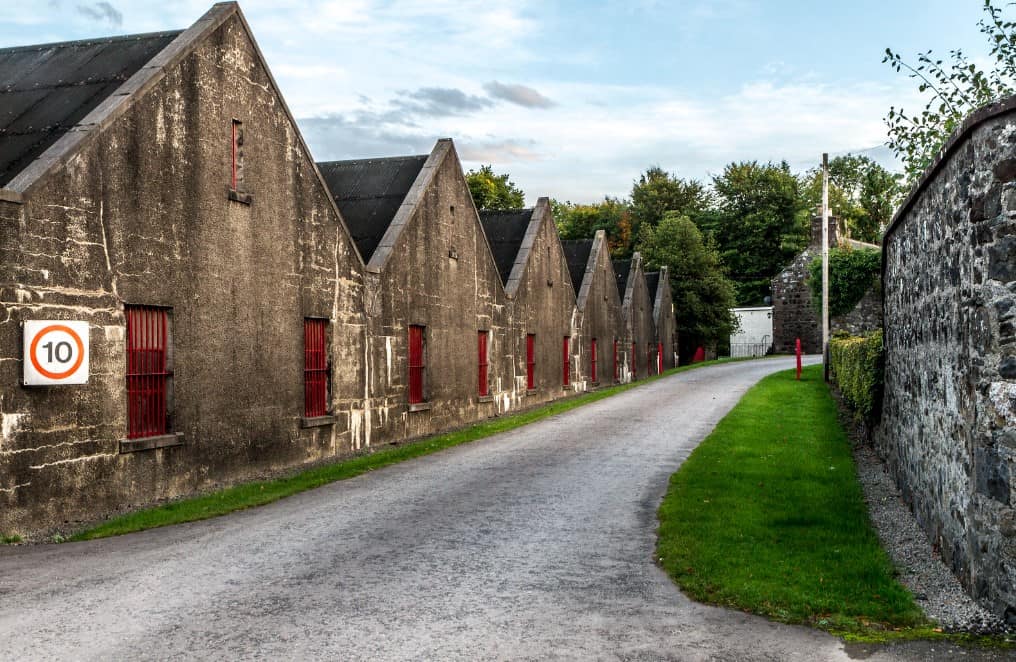
Dunnage houses are about as traditional as you can get when it comes to whisky maturation in Scotland. These are the types of buildings that have been used for centuries upon centuries, and have become synonymous with Scotch and the distilleries that produce it.
Dunnage warehouses differ to rickhouses in many ways, particularly when it comes to their construction. Rather than being several stories high, as is the case with rickhouses, dunnage houses are located at ground level and have just the single floor. They’re also made primarily of stone and feature an earthen floor, rather than one made from metal or concrete. Inside, dunnage houses are cool, largely dry, and dark. They’re actually very similar, in appearance at least, to wine cellars, except they’re not found underground.
Dunnage houses are pretty primitive in terms of their overall design. After all, the walls are made from stone, and the floor is made from earth. There’s a good reason for this, though. Because Scotland’s climate doesn’t vary massively throughout the year, (not compared with some places at least) both stone and earth are fantastic materials for helping to regulate the temperature and provide insulation. The interior temperature is therefore far less extreme than the outside, so even in the harshest of Scottish winters, the temperature remains consistent.
Another way in which dunnage houses differ to rickhouses is that they only have the one floor. Typically, the casks are only stacked three high, which again helps to keep the temperature nice and stable because there’s less distance for the warm and cold air to travel. This means that whisky aged in dunnage houses matures consistently, at a much slower pace. There’s also less spirit loss due to evaporation. Whiskey matured on the top floor of a Kentucky rickhouse in the summer can taste startlingly different to whiskey aged on the ground floor. In Scotch dunnage houses, though, batches are far more consistent. Rather than relying on fancy gadgets, distillers let nature do its thing instead.
As if that wasn’t all, there’s also evidence to suggest that the earthy, mineral-y atmosphere inside these buildings can also impart different flavours, notes, and characters into the whisky. We know that drams aged in maritime surroundings on places like Islay are far more likely to have salty, briny, coastal influences, so it’s very plausible that drams aged in dunnage houses can take on earthy, musty, mossy notes, which work surprisingly well.
Although racked warehouses are preferred in Scotch production nowadays, there are still plenty of distilleries that use dunnage warehouses to mature their drams. Kilchoman, Springbank, and Bruichladdich are just a few examples.
Both rickhouses and dunnage houses offer their own unique list of pros and cons, and both help to produce some truly delicious drams. Neither is superior to the other, they’re simply different.
If you’d like to learn more about your favourite whiskies, or simply treat yourself to a dram or two in the process, head on over to GreatDrams.com and take a look at the diverse selection of unique whiskies we currently have in stock.
With an impressive selection of limited-edition, rare, and award-winning whisky, as well as heaps of whisky info on our blog, it’s the perfect spot for any whisky lovers out there.