Does Ireland Have Whiskey Regions? And If Not, Should It?

The Highlands, Islay, Speyside, Lowlands, Campbeltown, and The Islands. What do these locations in Scotland all have in common, other than all being naturally stunning? They’re renowned for being whisky regions. Okay, I know that The Islands aren’t officially a whisky region, but come on, we all know that they are, right? 

Each of these different regions of Scotland are famous for producing their own unique styles of whisky. Each one has its own climate, its own water sources, its own grains, and its own unique surroundings that help to influence the whisky they produce. Speyside for example, is notorious for producing smooth, fruity, sweeter whiskies whereas Islay produces smoky, peaty, briny, coastal malts influenced by the sea. Drams from The Highlands can be coastal, fruity, and complex, and so on. 

In Ireland however, Irish whiskey has no official whiskey regions. Some consider this a good thing as it helps Irish whiskey be its own thing. Others, however, feel that regional whiskey identities could help the industry to grow and expand further. 

Here’s a look at how different regions of Ireland help to influence the whiskey produced there, and whether officially recognised Irish whiskey regions could be on the cards in the near future. 

Regional Influences on Whiskey

Despite the fact that Scotland’s whisky regions were not officially formalised until the 2009 Scotch Whisky Regulations, the concept behind them can be traced as far back as the Wash Act of 1784. Here, Scotland was split into Lowland and Highland regions. 

You probably won’t be shocked to learn that the motivation behind this was largely financial, mainly for legislation and taxation purposes. What quickly became apparent, was that whisky produced in Highland regions was noticeably different to whisky from the Lowlands. This was down to different climates, different ingredients, and different distillation practices. 

By 1909, Islay, Campbeltown, and Speyside were all recognised as whisky regions by the Royal Commission. While there is no law stating that whisky produced in a specific region has to taste a certain way, Scotland’s different whisky regions are useful for people who enjoy their drams to taste a specific way. 

In Ireland, there are no officially recognised whiskey regions, though whiskey produced in different parts of the country does indeed taste different and have different traits, notes, and characteristics. You may not realise it, but something as seemingly basic as the type of soil in which the grain is grown can have a massive influence on how the grain tastes, which means it will have a huge impact on how the whiskey tastes. The weather is another factor, as this can affect crop yields and soil quality. Water is of course another factor as different water sources will contain different ratios of minerals, which again will help influence how the whiskey tastes. Water with a high mineral content for example, can overpower the whiskey and disguise some of the more delicate notes. 

Regional Differences in Irish Whiskey

So, we’ve now established that Ireland doesn’t have any recognised whiskey producing regions. What it does have, though, all over the country, is a variety of different distilleries producing some fantastic drams. 

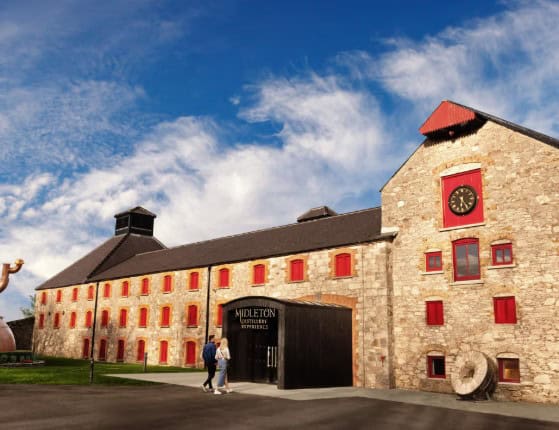
From County Cork’s Midleton Distillery to the Teeling Distillery in Dublin, here’s a look at some of Ireland’s different regions, their climates, and the exceptional distilleries that they’re home to. 
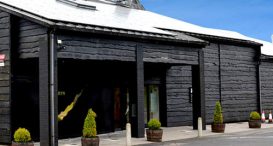
County Cork and Southern Ireland 

Southern Ireland, particularly places like County Cork, have long been associated with whiskey production in Ireland. 

Home to a number of distilleries, including The Midleton Distillery in Co Cork, it is synonymous with whiskey production in Ireland. The climate in southern Ireland is milder than other parts of the country. Temperatures during the winter are slightly warmer than other parts of the country and the summers tend to be cloudier and more humid. 

Barley thrives here and is of the highest quality. It takes on a sweeter, more robust character which lends itself beautifully to such classics as Redbreast, Midleton Very Rare, and of course, Jameson. 

Photo Credit: Jameson Whiskey

Eastern Ireland 

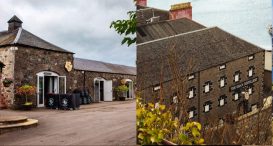
Eastern Ireland however, features a number of prominent Dublin distilleries, including Jameson Distillery Bow Street, Roe & Co, and one of our personal favs here at GreatDrams, Teeling

Many of Ireland’s newest, most innovative distilleries have opened in this part of the country over the last decade or so. The climate here is also fairly mild as it is close to the coast. The east also tends to get more sunshine. Drams produced here sometimes have very subtle maritime notes to them.

Because this part of the country is in such close proximity to Dublin, it lends itself perfectly to innovation and expansion. A lot of the distilleries here like to get a little more adventurous with their drams, and experiment with different flavours, casks, and finishes. 

Photo Credit: Teeling Whiskey

Northern Ireland 

Norther Ireland features rugged, weather-beaten coastlines and rolling pastures. It has a distinct maritime climate with cooler summers and milder winters. 

Northern Ireland sees a lot of wind and rain, which helps make the barley more robust and hardy. When bad weather inevitably rolls in off the Atlantic, Northern Ireland is its first port of call. 

Whiskey produced by Northern Irish distilleries tends to be malty, fruity, full-bodied, and slightly spicy. It shares some similarities with rye whiskey, at least, I think it does. 

Northern Ireland is home to a number of prominent names in whiskey production, including McConnell’s Irish Whiskey and the world’s oldest licensed distillery – Bushmills. 

Photo Credit: Ireland

Western Ireland 

Finally, we have Western Ireland. 

Again, the west coast is influenced massively by the Gulf Stream and the Atlantic Ocean, so the weather and climate here is, shall we say, temperamental. 

The weather here is wet, like, very wet, as it’s the wettest part of the country. The temperature is very consistent around the year, and the weather is very changeable. It’s actually very similar to the climate on Islay, and the similarities don’t end there. 

Western Ireland tends to see more peated whiskies than other parts of the country. Connemara Peated Single Malt Irish Whiskey is a prime example of this. It was created to reflect the majestic west coast of Ireland and features prominent earthy notes of bonfire smoke, heather honey, sea breeze, vanilla, and sweet malt. 

Photo Credit: Ireland

Does Ireland Need Whiskey Regions?

So, the big question, does Ireland need its own whiskey regions like Scotland? For me, personally, I don’t believe so. 

Irish whiskey is its own thing, and it doesn’t try to pretend to be otherwise. It’s well known for its smoothness thanks to its triple-distillation and is very different to Scotch. The industry has grown massively over the last decade and with more people than ever before visiting its many distilleries, that trend only looks set to continue. 

Having specific whiskey regions may result in a loss of innovation as distilleries may feel obliged to produce their drams in specific ways, to taste specific ways. Irish whiskey was once the biggest whiskey industry on the planet, and despite various setbacks, the comeback is most definitely on. It’s managed to get this far without its own whiskey regions, so as the saying goes ‘if it ain’t broke, don’t fix it’. 

If you’d like to learn more about your favourite whiskies, or simply treat yourself to a dram or two in the process, head on over to GreatDrams.com and take a look at the diverse selection of unique whiskies we currently have in stock.

With an impressive selection of limited-edition, rare, and award-winning whisky, as well as heaps of whisky info on our blog, it’s the perfect spot for any whisky lovers out there.  

Photo Credit: Ireland

Tags: irelandWhiskey Regions
Picture of Greg

Greg

My name is Greg, and I’m a brand strategy consultant, writer, speaker, host and judge specialising in premium spirits. My mission is to experience, share and inspire with everything great about whisky, whiskey, gin, beer and fine dining through my writing, my brand building and my whisky tastings.

You might be interested in

More from the blog

Leave a comment

Login / register