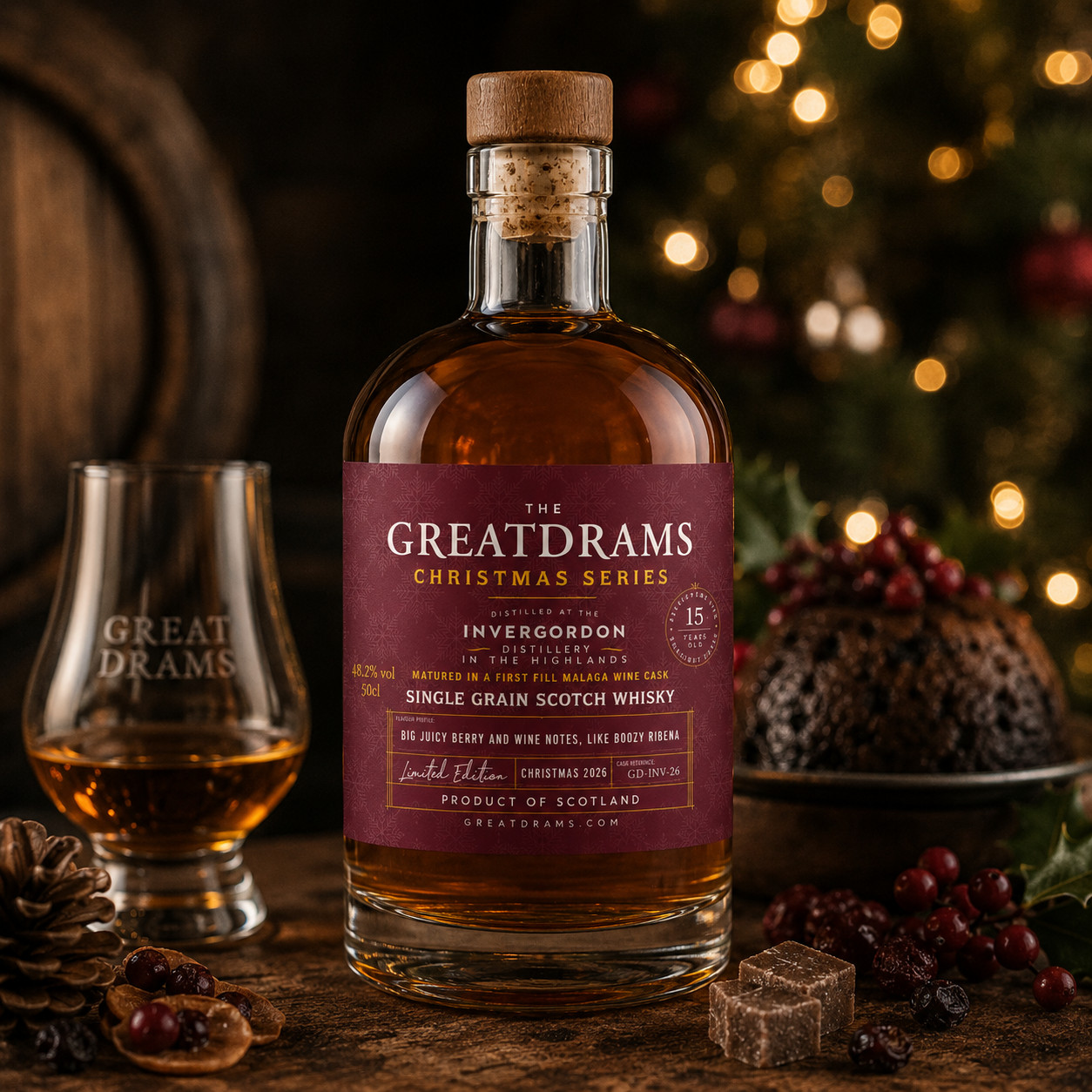
Charring the inside of a whisky barrel doesn’t just protect the oak staves, it completely alters the way a whisky looks, smells, tastes, and feels on the palate. As it turns out, there is an art to whisky barrel charring, which I want to explore in more detail today…
By Greg Dillon
Greg Dillon is the founder of GreatDrams.com, an award-winning independent bottler. A whisky writer and author of The GreatDrams of Scotland, his work focuses on authenticity, production, and whisky as something to be shared.
At its core, whisky is composed of nothing more than three ingredients: Water, grain, and yeast. Sounds pretty basic, right? So then, how can something that’s made up of so few ingredients, have such a cavalcade of different tasting notes and flavour profiles? Well, a great deal of a whisky’s final character is imparted thanks to the barrel/barrels it matures in.
When whisky leaves the stills and first enters those casks, it’s as clear as water, has a lot of harsh alcohol notes, and it just tastes, well, unfinished. Don’t get me wrong, new-make spirit can be delicious, but there’s a reason why our beloved Scotch has to spend at least three years aging in a whisky cask/barrel, before it can be sold as Scotch.
While in the barrels, whisky undergoes a huge metamorphosis. Like a caterpillar entering the chrysalis and emerging as a beautiful butterfly, once the whisky leaves the casks, it has been completely transformed into the delicious spirit that we all know and love so much. The barrels impart a huge amount of flavour and character into the whisky, thanks largely to the charring process that they undergo.
It turns out, though, that there’s an art to charring. It’s this which I want to explore in more detail today. Here’s a look at the art and expertise of whisky barrel charring.
What is Whisky Barrel Charring?
Barrel charring is about so much more than simply blackening or burning the insides of barrels before storing whisky inside. Charring is about preserving the barrels, protecting the oak, and perhaps most importantly of all, finishing the whisky once it’s stored inside.
99% of the time, the barrels used for aging and maturing whisky are made up of white oak. While different species of oak are used (American and European being prime examples), if the oak isn’t treated with the same love, care, and attention as the whisky, it won’t do its job, and you’ll be left with a harsh, sulphurous, watery, unrefined liquid. Yuck!
Oak is renowned for its chemical properties, its strength, and its durability, which makes it perfect for barrel aging. In order to get it to its absolute best however, it must first be set on fire. Sounds dramatic, and a bit crazy, right? Well, don’t worry, because there’s a very clever method to this madness.
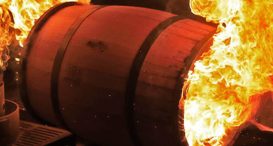
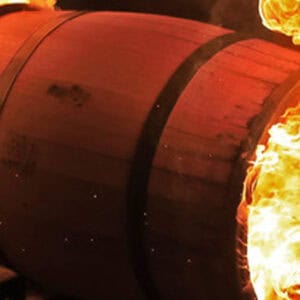
When oak barrels are first assembled, the interior of each one is exposed to an intense flame and burnt to varying degrees, which we’ll look at in more detail shortly. Usually, this comes from specially designed gas torches, though some cooperages use open fire the old-fashioned way.
When the oak is burnt, this sets off a series of chemical reactions which alter the molecular structure of the oak. This is primarily why barrel aging plays such an essential role in determining how a finished whisky is going to look and taste.
The key compounds responsible for altering the way the whisky looks, smells, tastes, and feels on the palate are: Hemicellulose, lignin, and tannins.
Hemicellulose
Hemicellulose is one of the primary compounds found in oak. When it is exposed to intense heat from the open flame, it undergoes a caramelisation process which creates sugars that help to impart sweet and sugary flavours into the whisky. These include flavours like honey, caramel, toffee, golden syrup, treacle, maple syrup, and burnt sugar. It also helps to give the whisky a little colour too.
Lignin
Lignin is another compound found in oak that completely transforms when exposed to fire. As the lignin is heated, it breaks down and releases a compound known as vanillin. As you can probably guess from the name, vanillin provides strong and concentrated vanilla notes, along with flavours such as cream soda, rich tea biscuits, and sponge cake.
Tannins
Finally, we have tannins. A little tannin goes a long way when it comes to distilling whisky, and thankfully, oak contains just the right amounts. Too many, and the whisky will have a harsh bitter, “off” taste. Just the right amount however, and the whisky will have a richer, creamier mouthfeel with plenty of body.
Why are Whisky Barrels Charred?
So, we now know what barrel charring is, but we’re still not 100% clear on why barrels are charred.
As touched upon prior, charring the oak helps to make the barrels waterproof and prevents them from leaking. It also helps to provide a protective layer against rot, mould, woodworm, and other insects and pests which could potentially munch their way into the wood and cause all manner of problems.
Filtration is also a key reason why whisky barrels first have to be charred before use, and it’s something we’ve not looked at yet. In America for example, by law, bourbon whiskey must be stored in brand-new virgin American oak barrels that have been charred. This not only helps to alter the character of the whisky, it also acts as a natural carbon filtration system which removes any impurities from the whiskey, giving it a smoother, mellower, far more pleasant taste.
During the maturation process in the barrel, temperature fluctuations cause the whiskey to contract and expand and pass in and out of the wood. Each time this occurs, the activated charcoal helps to filter out bitter tasting notes, unwanted impurities, and eggy-tasting sulphurous compounds. It also gives the whiskey a fantastic amber brown colour that, for me at least, makes it look and feel far more “premium”.
Barrel Charring Levels
Finally, before we wrap things up, we’ll finish off with a quick look at the different levels of char you can expect to find in various whisky barrels.
How intensely the inside of a whisky barrel is charred, and to what depth, will determine what sort of flavours, notes, aromas, and characters are imparted into the whisky itself.
Barrel char is typically split into four standard levels, with one being the lightest, and four being the heaviest. The lighter the char, the subtler the notes that are conveyed, and vice versa.
Level 1 Char
Typically exposing the inside of the barrel to 15 seconds of burning, this is considered the lightest level of charring.
This is a very light level of burning that barely scorches the surface of the wood. This provides subtle nutty notes, which a hint of vanilla and gentle spice. There isn’t a great deal of sweetness provided here as the wood isn’t exposed to the flame long enough for the compounds within to caramelise.
For those looking for a whisky with fewer sweet caramel and honey notes, a level 1 charring should be sufficient.
Level 2 Char
A level 2 char is considered to be medium. Here, the wood is burned for around 30 seconds. This is longer for some degree of caramelisation to occur, resulting in more prominent sweet and sugary notes, along with nutty, spicy flavours and aromas.
Level 3 Char
Considered a heavy char, this level of charring exposes the wood to the flames for around 35 seconds. Those extra 5 seconds may not sound like much, but in terms of flavour profile, they can completely transform a whisky.
With a heavy level 3 charring, you’ll unlock smokier notes such as coffee and charred oak, coupled with vanilla, brown sugar, caramel, dark chocolate, and butterscotch toffee.
Level 4 Char
Finally, a level 4 char, or an ‘Alligator Char’ is considered the most intense standard charring level of all.
Here, the inside of the casks is burned for as long as 55 seconds. It gets its name from the fact that, once the wood is burned, the oak staves begin to split and crack and resemble that of an alligator’s skin.
With this level of charring, bolder, richer, more complex notes are provided. You’ll get smoky campfire notes, toffee apple, burned sugar, mixed spice, leather, and a deeper chestnut brown colour.
Wrapping Things Up
So, that brings things to a close. As you can see, charring a whisky barrel is about so much more than simply burning the insides and protecting the oak in the hopes of extending its longevity. It is, in fact, an integral step in the whisky production process that helps to reinforce a whisky’s character and identity. It’s also one of the many keys to unlocking that old oak wisdom I like to talk about so much.
Whether you’re after a bold, rich, sweet and smoky bourbon or a light and delicate fruity and floral Scotch, fire played a role in the process that is every bit as important as the distillation itself. This is testament to the love, care, expertise, craftsmanship, and attention behind every barrel used for aging the whisky.