


Last Updated: 17 November 2026
Quick Summary
The best rare Scotch whisky to collect combines genuine scarcity, distillery reputation and bottle condition. Prioritise closed or silent distilleries with production runs under 3,000 bottles, ideally under 500, and always keep the original packaging and paperwork to protect resale value.
- Closed or mothballed distilleries such as Port Ellen and Brora carry real weight because the liquid can never be made again.
- Production runs under 3,000 bottles are worth a look, while under 500 is a serious contender.
- Sherry cask, cask strength and single cask specs tend to age well in collector terms.
- Store bottles upright, away from direct light and at stable temperature to protect liquid and label.
- Set your price band before you buy, then walk away if bidding goes over it.
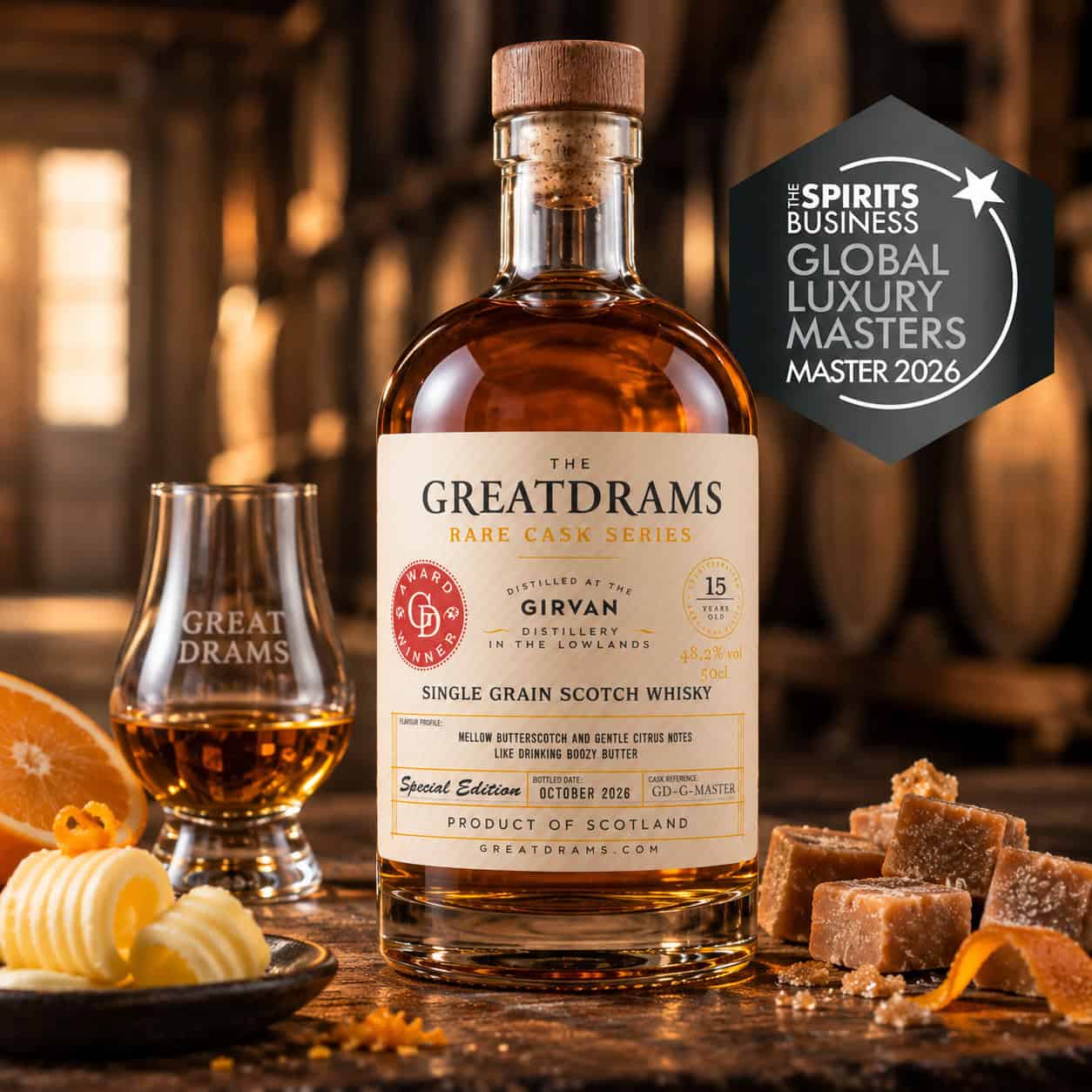
Ready to start collecting rare Scotch?GreatDrams offers limited-edition single casks, tastings and cask brokerage guidance.
Table of Contents
- What Makes a Rare Scotch Whisky Worth Collecting
- Whisky Collecting for Beginners: A Repeatable Bottle-Selection Framework
- How to Store Whisky Bottles and Check Whisky Bottle Authenticity
- Frequently Asked Questions
What Makes a Rare Scotch Whisky Worth Collecting
A bottle of The Macallan 1926 sold for a record-breaking £2.1 million, according to DLA Piper’s report on record whisky auction prices, which tells you how seriously the market takes scarcity. But a high price tag is not the same as a good collectable. At GreatDrams, we’ve watched collectors chase bottles that looked like gold and end up unable to shift them at half what they paid.
So what separates the best rare Scotch whisky to collect from the rest? Genuine scarcity, distillery reputation and bottle condition.
Scarcity means a production run that has genuinely ended. A closed distillery such as Port Ellen or Brora carries real weight because the liquid can never be made again. A “limited edition” of 50,000 bottles is marketing, not rarity.
Distillery reputation matters because collector demand follows stories. The Macallan remains the most valuable Scotch whisky brand globally, per The Whisky Club’s market analysis, and that status props up secondary market prices across its back catalogue.
Bottle condition decides the final number. Original packaging, intact capsule, clear fill level and documented provenance all move resale value. A perfect bottle with no paperwork is worth less than a scuffed one with a paper trail.
For the deeper framework, our guide to what decides if a limited edition whisky is worth collecting breaks it down, and before spending a penny, read our honest take on whether whisky investment is worth it.
Whisky Collecting for Beginners: A Repeatable Bottle-Selection Framework
Beginners buy what’s on the shelf and hope. Collectors buy against criteria, and the difference over five years is enormous.
Here’s the framework we’d use if we were starting a collection from scratch tomorrow:
- Check the production run. Under 3,000 bottles? Worth a look. Under 500? Serious contender.
- Confirm the distillery status. Silent and mothballed sites get priority; collectors are actively shifting toward these to navigate current market conditions, according to WhiskyFix’s 2026 market analysis.
- Look at the cask type and strength. Sherry cask, cask strength, single cask. These are the specs that age well in collector terms.
- Verify the age statement. A 50-year-old Glendronach carries weight because extended sherry cask maturation at that age is genuinely rare.
- Check independent bottler credentials. Collectors are actively seeking releases from independent bottlers for unique profiles, per collector discussion on r/Scotch. Single casks from respected bottlers can hold their interest well, though results vary.
- Set your price band before you buy. Decide what you’ll pay, then walk away if it goes over. Auction fever is real.
Two bottles at the same price can have wildly different collector value: a distillery bottling of 20,000 units with a nice box, versus a single cask of 300 from a silent distillery. Guess which appreciates.
For a curated starting point, our guide to the best old and rare bottles gives real examples, while where to find limited-edition whisky off the high street covers sourcing.
Here is the framework boiled down to the criteria that actually matter when you are choosing a bottle.
| Criterion | What to look for | Why it matters |
|---|---|---|
| Production run | Under 3,000 bottles worth a look; under 500 a serious contender | Genuine scarcity, not marketing |
| Distillery status | Silent and mothballed sites get priority | Collectors are shifting toward these |
| Cask type and strength | Sherry cask, cask strength, single cask | Specs that age well in collector terms |
| Age statement | A 50-year-old Glendronach carries weight | Extended sherry cask maturation at that age is rare |
| Bottler credentials | Respected independent bottlers, single casks | Unique profiles collectors actively seek |
| Price band | Set it before you buy, then walk away | Auction fever is real |
How to Store Whisky Bottles and Check Whisky Bottle Authenticity
Storage and authentication are where collections quietly lose value. A badly stored bottle is worth less than a well-stored one, and one you can’t prove genuine is worth less again.
Store bottles upright, away from direct light, at stable temperature, since heat and UV degrade both liquid and label. Keep the original packaging, box and paperwork together; provenance is half the value.
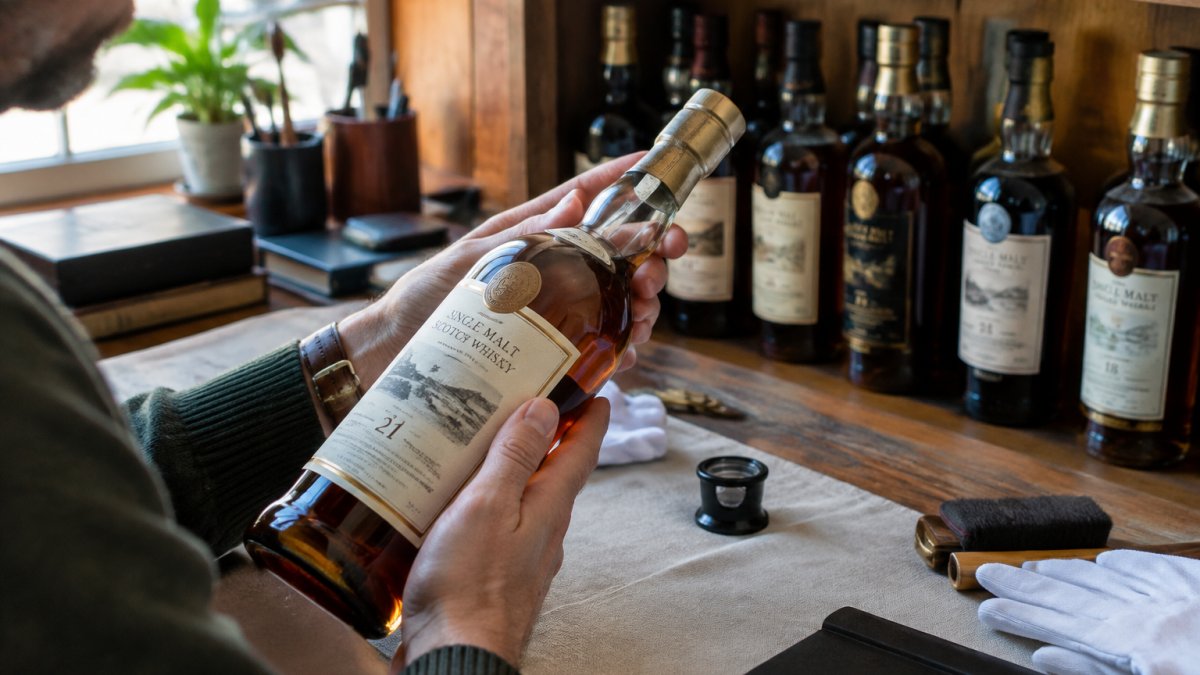
On authenticity, check the capsule seal for tampering, compare label print quality against known examples, and verify the bottle code against distillery records where possible. Counterfeits fail on small details, not big ones. Independent bottlers’ labels carry details that make provenance easier to verify; our piece on why independent bottlers still matter explains what to look for.
Past performance is not a guarantee of future returns, whatever the asset.
The rare whisky market rewards patience and punishes impulse. If you want to build a collection with real provenance behind it, GreatDrams offers limited-edition single cask whiskies, expert guidance through tastings, and cask brokerage services that make the process transparent rather than mystifying. Get started with GreatDrams and build a collection you actually understand.
Frequently Asked Questions
What makes a Scotch whisky bottle rare?
Rarity usually comes from three things: a small production run, a closed or silent distillery, and time. A single cask release of a few hundred bottles from a distillery that no longer operates is far scarcer than a widely distributed limited edition. Age statements and cask strength add interest, but genuine scarcity is what collectors chase.
Are limited-edition whiskies worth collecting?
Some are, many are not. A limited edition from a famous distillery with a large outturn can still be widely available years later. Look for single cask bottlings, independent bottler releases and expressions from silent distilleries instead. Independent bottlers are a strong route in because their runs are genuinely small. Treat the word limited as a starting point for research, not a guarantee of value.
How should you store rare Scotch whisky?
Keep bottles upright, away from direct light and in a stable, cool environment. Heat and sunlight degrade spirit faster than most collectors realise. Keep original packaging and any certificates, because condition and completeness affect resale value. If you plan to insure or resell, photograph the bottle, capsule and label and record where and when you bought it. Proper storage and paperwork together protect both the liquid and the provenance.







-

GreatDrams Whisky Pouch 50ml Multiple Options Available
Price range: £8.00 through £20.00