5 Bourbon Whiskey Myths Everyone Still Believes

Bourbon whiskey, despite being hugely popular all over the world, is also a spirit shrouded in misinformation and misconception. This could potentially hinder your drinking experience, and nobody wants that.

By Greg Dillon 

Greg Dillon is the founder of GreatDrams.com, an award-winning independent bottler. A whisky writer and author of The GreatDrams of Scotland, his work focuses on authenticity, production, and whisky as something to be shared.

As fantastic as bourbon whiskey is, (and take it from me, it really is fantastic stuff, as if you didn’t already know!) as well as being steeped in history and tradition, it’s also, unfortunately, a spirit steeped in a great deal of misconception. 

While there has always been a strong market for bourbon whiskey here in the UK, it’s only over the last decade or so, that I’ve really started noticing a distinct shift in buying behaviours. As well as “safe” brands such as Jim Beam, Maker’s Mark, and Woodford Reserve, whiskey drinkers are now experimenting with different drops, as are distilleries and independent bottlers such as GreatDrams. Feedback has been nothing but positive.

With bourbon enjoying quite the renaissance in recent years, that unfortunately means there’s a great deal of misinformation floating about out there surrounding this fantastic whiskey from our friends over the pond. I want to put that right. 

While you can never truly guarantee what you read, or hear, is genuine, I do believe that the ability to separate fact from fiction will only enhance your drinking experience. After all, the more I know about a whisk(e)y, the more I enjoy it, and I know I’m certainly not alone in that regard. 

So, with that said, here are five common bourbon whiskey myths that people still believe. 

Myth 1 – Bourbon Works Best with a Mixer

Listen, I’ll be the first to tell you that a bourbon whiskey and cola on ice is one the tastiest, most refreshing tipples you could ever wish for, especially in the hot sunshine. 

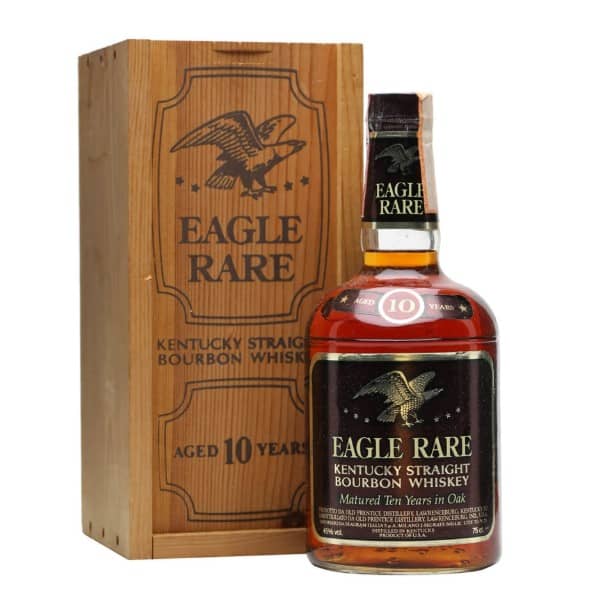
Bourbon does indeed go great with cola, along with lemonade, ginger ale, and a variety of other mixers too. It is not, however, a whiskey designed exclusively for mixing. There are heaps of bourbons out there that work incredibly well as sipping whiskies, either neat, chilled, or served over ice. Eagle Rare 10 Year Old for example, is renowned for its toffee and maple-rich nose, its complex caramel, oak, and vanilla flavours, and its smooth and creamy finish rich in dark fruits, toasted oak, and dark honey. Serving it with a mixer provides a completely different tasting experience. 

Put simply, bourbon tends to go great with a mixer, but there are plenty of bourbons that are fantastic when enjoyed neat as well. 

Photo Credit: The Whisky Exchange

Myth 2 – Bourbon Must be Distilled in Kentucky

This is the biggie, and out of everything on my list today, if there was just one myth I could clear up once and for all, it would be this one. 

A great deal of individuals believe that bourbon whiskey must legally be produced in Kentucky in order for it to be labelled and marketed as a bourbon. This is simply not true at all. 

Bourbon whiskey can be, and is, legally be produced anywhere in the USA, with no issues whatsoever. Is the vast majority of the world’s bourbon whiskey produced in Kentucky? Absolutely. Does this mean it legally has to be produced in the State? Absolutely not. If the label states ‘Kentucky Bourbon’ then of course it must have been made in Kentucky, if it simply reads ‘bourbon’ however, then it can be produced anywhere in the country.

While are strict rules and regulations that must be followed when it comes to bourbon whiskey, being solely produced in Kentucky isn’t one of them. The only official law regarding where it is produced is that, like Scotch whisky can only be produced in Scotland, bourbon whiskey can only be produced in the United States of America. 

Myth 3 – Jack Daniel’s is a Bourbon

While there are few things that irritate me in life, when I see so-called “experts” referring to Jack Daniel’s as a bourbon whiskey, I definitely find myself tutting more than I’d like. It’s the same when full-sugar coke is referred to as “full-fat coke” despite the fact that it’s fat-free, but hey, that’s a whole other story. 

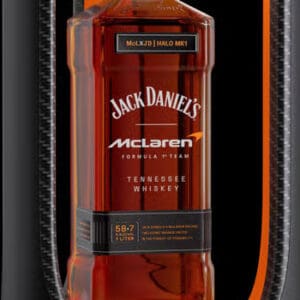
Jack Daniel’s is not a bourbon whiskey, in much the same way as Jameson Irish whiskey is not a Scotch. Jack Daniel’s, which is delicious, by the way, is a Tennessee whiskey and not a bourbon. True, they do share many similarities, and there are many legal grey areas, but Tennessee whiskey and bourbon whiskey are not one and the same. 

Of course, Tennessee whiskey is distilled and produced in Tennessee, and must also contain a mash of at least 51% corn, and be aged in new charred American white oak barrels. What really sets it apart, though, is the filtration process. Known as the Lincoln County Process, this filtration step requires the whiskey to be filtered, drop by drop, through sugar maple charcoal before being aged. The charcoal helps to remove impurities, impart a rich amber colour, and help create a smoother, mellower spirit. 

Myth 4 – Bourbon Needs to Age for At Least 2 Years

Unlike Scotch whisky, which legally must be cask-aged for a minimum of 3 years before it can be sold as Scotch, bourbon whiskey does not need to age for a specified duration of time. It does need to barrel age, but that’s it.

A quick search online reveals that a number of people believe that bourbon must be barrel-aged for a minimum of 2 years before it can be marketed and sold as bourbon. This is incorrect. While bourbon must indeed be aged in charred, new American oak barrels, there are no legal requirements for how long this process takes. 

Technically, the second the spirit touches the wood in the barrels, it has been aged and could be legally sold as bourbon. It almost certainly wouldn’t taste all that great, but legally, it could be sold if the producers wished to do so. 

So, where did the whole ‘2-year minimum’ aging thing come from? Well, that’s because legally, for a bourbon to be sold as a ‘straight bourbon’ it must undergo a two-year cask aging process and be barrelled at no more than 62.5% ABV, or 125 proof. 

Myth 5 – Older Bourbons are Always Better

Much like with Scotch, there are a great deal of misconceptions out there that the older the whisky/whiskey, the better it is. That isn’t always the case. 

People assume that older bourbons are always going to be superior to younger drams. The truth of the matter is that a bourbon aged 3 – 4 years could very well taste nicer than a bourbon that has undergone a 10-year maturation process. The key word here is ‘could’. As we know in whiskey, there are no guarantees. 

Bourbon matures very quickly because of the climate in which it is produced, which helps to impart those wonderful caramelly, oaky, sugary, vanilla notes that have become so synonymous with this fantastic spirit. 

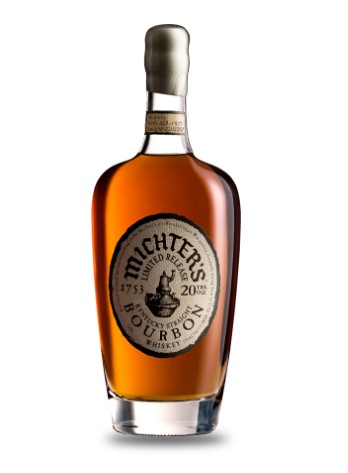
While there are plenty of well-aged bourbons up for sale such as Michter’s 20 Year Old, that taste phenomenal, there are heaps of younger bourbons such as New Riff 4-year-old, that have also proved incredibly popular, and more than hold their own against older drams.

Photo Credit: Michter's Distillery
Tags: BourbonWhiskey Myths
Picture of Greg

Greg

My name is Greg, and I’m a brand strategy consultant, writer, speaker, host and judge specialising in premium spirits. My mission is to experience, share and inspire with everything great about whisky, whiskey, gin, beer and fine dining through my writing, my brand building and my whisky tastings.

You might be interested in

More from the blog

Leave a comment

Login / register