I remember several years ago now, being in a whisky bar and quite frankly, being amazed by the huge selection of drams available from India. Don’t get me wrong, I knew Indian whisky was on the up, but I was surprised by just how much variety there was.
Years later, and Indian whiskies are currently expanding at an astonishing rate, which I think is great news for whisky enthusiasts such as ourselves. When it comes to whisky, there is no such thing as too much choice. The more the merrier I say.
For many years now, India has been one of the world’s largest consumers of Scotch, so it’s clear they have an affinity for one another. It’s only in recent years however, that Indian whisky has really stepped up, and could very well be on track to be up there with Irish whiskey, American bourbon, Japanese whisky, and even Scotch.
For today’s blog, I thought I’d look at Indian whisky in more detail and find out exactly why it’s currently enjoying such an enormous period of growth.
An Unfair Reputation
For the more casual whisky drinkers out there, Indian whisky is often perceived as inferior, especially when compared with single malt Scotch. The truth of the matter is that there are now a wide range of award-winning Indian drams out there that can easily hold their own against some of the biggest names in whisky.
So, why is Indian whisky often looked down upon? Well, it’s mainly down to the fact that, in the past, whisky-inspired spirits made in India weren’t always exactly premium quality. Indian “whisky” used to be made by blending cheap imported malt whisky with molasses and spirits made with molasses (almost like a primitive rum). Don’t get me wrong, I’ve actually tried some of these blends, and they tasted okay (nice and sweet as you’d expect) but they weren’t a patch on Scotch.
Because Indian whisky used to be made this way, it couldn’t actually be legally sold as whisky/whiskey in the UK, US, and other parts of Europe. In recent years however, Indian whisky has undergone an astonishing transformation and now makes up a large percentage of the world’s most popular single malts. By 2034, it is projected to grow at a CAGR (Compound Annual Growth Rate) of 7.6%.
Amrut Fusion – The Dram That Changed It All
Despite the fact that India’s whisky distilling history can be traced as far back as the 1850s, it wasn’t until 2010 that Indian malt whisky really solidified itself as a world contender.
One of the biggest names in Indian whisky production is Amrut. Amrut Distilleries were founded in Bangalore in 1948. The brand made history in 2004, when, in an incredibly bold move, they launched their very own single malt in Glasgow, Scotland of all places. And do you know something? It went down fairly well. Rather than simply trying to imitate Scotch, it instead carved out its own identity, whilst remaining true and respectful to Scotch whisky’s historic roots.
The turning point, however, came in 2010, when Jim Murray’s world-renowned Whisky Bible ranked their Amrut Fusion as the third-best whisky in the entire world. Wow! Suddenly, whisky aficionados began taking Indian whisky, particularly drams from Amrut, incredibly seriously, and rightly so, as it’s an exceptional dram.
Different Climates, Different Styles
If you’re a regular reader of the blogs here at GreatDrams, you’ll know just what a different climate and terroir can make on a whisky as I’ve covered it a few times in the past. Not surprisingly then, climate plays a massive role in Indian whisky production and really helps set it apart from Scotch.
India’s climate and Scotland’s climate are, you’ll be shocked to hear, incredibly different. In India it is hot, tropical, and dry for much of the year. In Scotland, it’s cool, damp, and breezy. Scotland’s climate is perfect for slow maturation periods which last, at minimum, three years, but often, decades.
By contrast, India’s hot and tropical climate greatly speeds up the maturation process and encourages a more pronounced interaction between the oak/wood casks and the spirit contained within. Typically, whiskies aged for 3 years in Scotland will be a pale golden colour and will usually have a less intense flavour profile. Whiskies aged for 3 years in India are usually far darker in colour, and have deeper, richer, more complex flavours than their Scottish counterparts aged for the exact amount of time.
While climate plays a huge role in Indian whisky production, it’s certainly not the only deciding factor when it comes to the finished product. Indian whisky is renowned for its innovative cask finish and its use of locally sourced ingredients. Indian soil for example, contains different nutrients to Scottish soil, which means that the grains also taste very different. This too, helps Indian whisky to carve out its own identity.
Popular Indian Drams
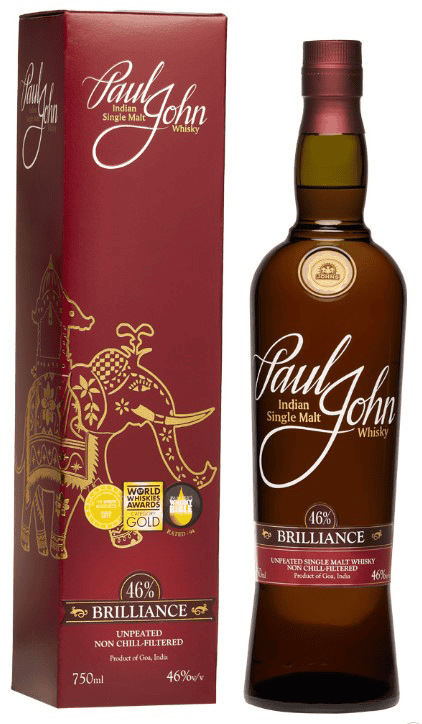
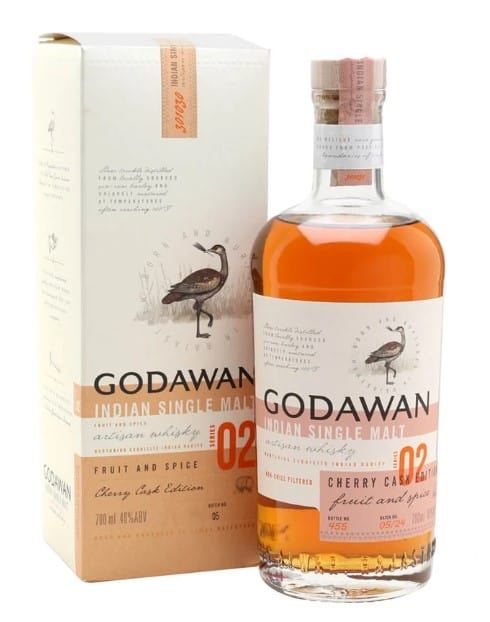
Before we wrap things up today, I’ll leave you with a quick look at 3 of the world’s most popular Indian drams currently available.