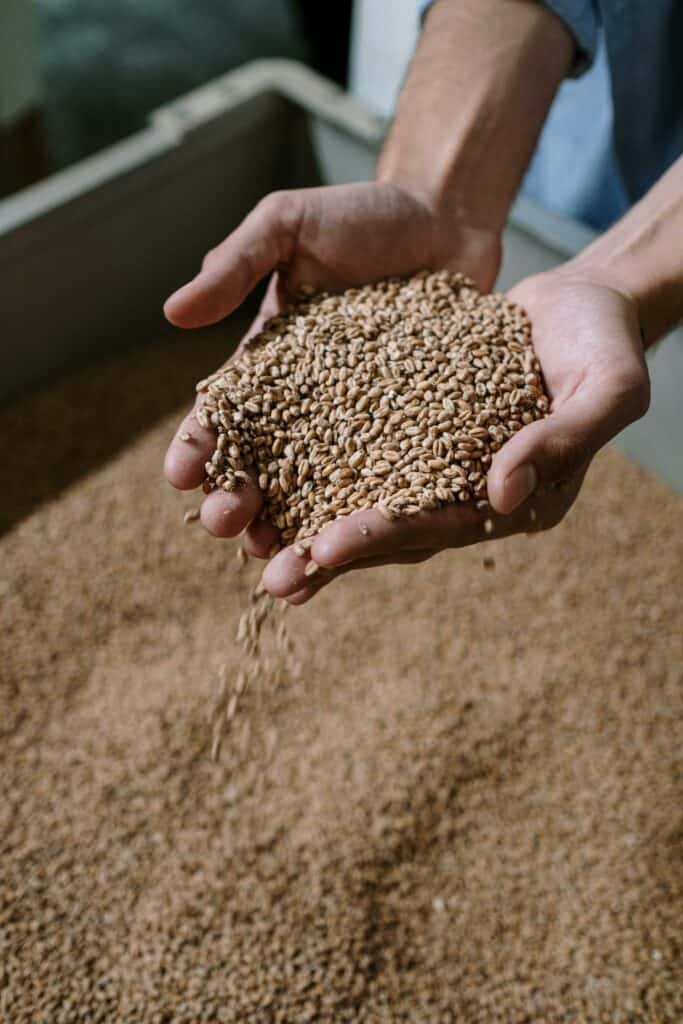
When it comes to a spirit’s defining flavours and characteristics, you can call me biased if you’d like, but I’d argue that whisky is the most complex of all.
Not only do different whiskies from different parts of the world have different profiles and characteristics, whiskies across the different home nations are also vastly different to one another. Whiskies from one region of Scotland may taste and smell of fresh apples, toffee, and citrus fruits, while whiskies produced a few hundred miles to the west may have strong smoky, medicinal, briny, maritime qualities instead.
Despite there being countless different flavour profiles and characteristics for whisky, it’s hard to believe that, at its core, it begins with just three ingredients – yeast, water, and grain. While cask type gets much of the credit for a whisky’s final flavour, I feel grain doesn’t get the respect that it deserves, which is why I’ll be looking at precisely that today.
Here’s a quick look at the different types of grain used in whisky production, and why they matter.
As it’s primarily Scotch that we focus on here at GreatDrams, it’s only fitting that we begin with the foundation of Scotch whisky – malted barley.
Malted barley is literally essential for single malt Scotch whisky production as it is the only grain permitted for use in its production. We can’t, however, forget our chums just off the coast in Ireland, as barley is also an integral ingredient used in Irish whiskey production too.
Malted barley is renowned for its creamy mouthfeel and its nutty, malty, smooth, fruity, and complex flavours and character. As part of Scotch whisky production, grains of barley are soaked in water, malted, and dried to activate important enzymes needed for converting starches within the grain into fermentable sugars. This is of course vital, otherwise fermentation wouldn’t take place, and you’d be left with a sloppy, grainy, water and yeast mixture that tasted of raw barley and not much else, other than sadness and heartbreak.
There are different types of barley found all over the world and different varieties provide different flavours and characteristics. Some strains of barley for example, impart more of a malty, biscuity, nutty flavour into the whisky, whereas others may provide sweeter, fruitier, smoother flavours. Things such as climate, terroir, growing conditions, and barley variety all have an impact on how the grain tastes and how whisky/whiskey produced from the grain tastes.
We also can’t overlook peated whisky commonly associated with Islay. Peated whisky has robust smoky, earthy flavours, which is all down to the malting process. Here, in order for the grains to germinate, they are floor malted and kiln dried. Peat is burned to provide heat for the kiln. As the peat smoulders away, it produces smoke which dances over the damp barley grains. As the grains dry, they absorb phenols from the smoke which helps to give them a smoky, medicinal, earthy flavour. They then impart these flavours and characters into the whisky produced from them.
Rye
Here in the UK, rye whiskey isn’t anywhere near as common as it is in America, though it is beginning to gain traction, and rightly so.
Rye whiskey is made from rye, as you’ve probably guessed, and it has a very distinct and unique flavour and profile, unlike any other type of whiskey out there. Rye whiskey is typically described as being bold, spicy, dry, and peppery. It tends to provide stronger flavours such as black pepper, pink peppercorns, mixed spice, baking spices, menthol, spicy oak, scorched caramel, and orange zest.
Rye was once the predominant grain used in whiskey production in America, but a variety of factors including Prohibition, rising farming costs, difficult growing conditions, and changing whiskey palates and preferences meant that it was overtaken by corn, which was also cheaper and easier to grow across the different states.
In order for a rye expression to be a true rye whiskey, it must be produced from a mash bill of at least 51% rye. It can be used to help balance sweetness or be used in experimental drams to produce some truly exceptional and unique flavours.
Corn
For those of you with a sweet tooth who enjoy your whiskies on the sweeter, mellower, and smoother side, corn is the grain which will appeal to you the most.
Corn is a grain (yes, I know it’s also a vegetable, but it begins its life as a grain, so there!) which is used primarily in American bourbon whiskey. To be legally classed as bourbon, amongst other things, the whiskey must contain a mash bill of at least 51% corn. The remaining 49% can be made of other grains in different ratios.
Despite this, most bourbon mashes contain far more corn than other grains. Buffalo Trace for example, contains between 80% and 90% corn in its mash bill. Woodford Reserve Double Oaked, which is another very popular bourbon, contains 72% corn, along with 10% malted barley and 18% rye.
Bourbon must also be aged in charred, virgin, American oak barrels. Natural sugars within the oak are caramelised during the charring process, helping to provide even more sweeter caramel and vanilla notes that complement the existing sweet characteristics of the corn wonderfully. Bourbons tend to feature notes of caramel, vanilla, toffee, maple syrup, peanut brittle, orange, honey, charred oak, butterscotch, and crisp orchard fruits.
Bourbon and other whiskies made from mash bills rich in corn, are often smoother, sweeter, and mellower to drink. They can be sipped neat, enjoyed over ice, used in cocktails such as an Old Fashioned, or served with mixers such as cola, lemonade, or ginger ale.
Wheat
And finally, we have one of the lesser-appreciated grains in my opinion – wheat.
Wheat is commonly found in grain whiskies, which are produced using a combination of malted barley and other grains such as rye, corn, and of course, wheat. In fact, most blended Scotch whiskies you know and love so much will be made when malt whisky is combined with a blended whisky. Johnnie Walker being a prime example.
Wheat is one of the milder grains used in whisky production. Think of it as rye’s timid little cousin. It provides softer, smoother, relaxed, sweeter notes that are less pronounced. This is why it works so well in blends. Instead of providing strong and dominant flavours, it instead provides softer, sweeter flavours that help to marry everything together. It doesn’t steal the show or hog the limelight; it instead watches from the sidelines and helps the other ingredients be the best version of themselves that they can be. What a supportive little fella’.
Wheat tends to provide smoother, creamier mouthfeels in whisky and provides notes such as honey-baked bread, toffee apple, buttery popcorn, milk-drenched cereal, butterscotch pudding, dried fruits, and toasted nuts and cereal grains.
If you’d like to learn more about your favourite whiskies, or simply treat yourself to a dram or two in the process, head on over to GreatDrams.com and take a look at the diverse selection of unique whiskies we currently have in stock.
With an impressive selection of limited-edition, rare, and award-winning whisky, as well as heaps of whisky info on our blog, it’s the perfect spot for any whisky lovers out there.
Photo Credit: Farmer.blog