As great as it is to be able to buy a bottle, or several, of whisky online, it does have its drawbacks. Particularly when it comes to fakes and frauds.
As ashamed as I am to admit it, while browsing social media the other night, I was nearly duped by a fake page selling a fake whiskey. As I was browsing, I saw an ad from an unknown page selling a “limited anniversary edition” bottle of Jameson’s whiskey to celebrate the Lord of the Rings movie’s 25th anniversary. The bottle was green, looked to be ceramic, and was designed in the style of a Hobbit’s home. Now, alarm bells should have been ringing right away because the first movie was released in 2001. What should have sealed the deal, though, was the fact that the “bottle” was A.I generated.
Don’t get me wrong, a closer look at the picture and it was obvious it was A.I, but for a split second I believed it was genuine and was a Jameson’s release I must have missed. This made me wonder whether others would fall into the same trap as I, which is where I got the inspiration for today’s blog.
With so many fakes floating around out there, here are 5 ways to spot a bootleg dram that isn’t genuine.
Check the ABV
One of the quickest and simplest ways of checking whether a whisky you’ve got your eye on is genuine, is to check the ABV.
Legally, Scotch whisky must have an ABV of at least 40%. Anything less than that, and by law, it is not allowed to be sold as whisky. Instead, it must be marketed as something different such as a ‘spirit drink’ or a ‘whisky liqueur’.
If buying online, don’t just zoom in on the photo of the bottle and check there, because the photo may not be genuine. Read the description, and if in doubt, contact the seller and find out what strength the whisky is. If it’s less than 40% ABV, it’s not Scotch whisky.
Check for Spelling Mistakes and Printing Errors
Listen, everybody makes mistakes, and when writing these blogs, I’m sure I’m guilty of the odd typo here and there no matter how careful I am. When it comes to genuine whisky bottles, though, spelling mistakes and printing errors can be tell-tale signs of a bootleg.
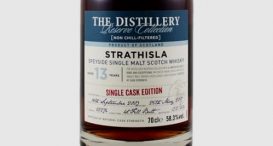
If you’re able to view the bottle in person, read the label and look for any spelling mistakes or errors on the label or packaging. If for example, you’re considering a bottle from a well-known distillery, chances are the labels and packaging on their bottles will be free of any typos, spelling mistakes, or printing errors. If you notice spelling mistakes or smudges on the label, this could be a sign of a fake.
If you’re browsing online, as well as reading the label on the photos, go ahead and read the product description too. The occasional typo you can forgive, but if it reads like bad A.I, or just comes across as amateurish and unprofessional, it’s probably a bootleg.
Examine the Label
If you’re buying online, you won’t be able to do this until you get your hands on your bottle of whisky. If you get chance before buying, however, make sure you examine the label carefully.
This time, we’re not looking for typos and printing errors, we’re looking for signs of the label being tampered with. While I’m sure fraudsters are far more sophisticated than this, some sellers have been known to source cheap whisky, remove the label as carefully as they can, and replace it with a label from a much more expensive dram. Think of replacing the label on a bottle of Famous Grouse with a Macallan label and you get the idea.
Examine the label, especially the edges, and look for any signs of it having been tampered with or replaced. If the edges are raised, it’s on wonky, or if there’s a lot of glue residue, the label may have been tampered with.
Crunch Those Numbers and Do Your Research
Before you buy a bottle of whisky from an unknown seller, it’s important to do a bit of research and check the dates on the bottle.
If you’re spending a lot of money on a dram, you of course want to make sure it’s genuine. This is where it pays to spend a little extra time on research. If for example, the description states that the whisky was distilled on a certain date, check whether the distillery was actually distilling whisky during that period. If not, it’s obviously a fake.
If the bottle states it is number 99 out of 100, find out whether the distillery in question really did produce 100 bottles of that particular batch. If they only produced, say, 80, then unfortunately it’s almost certainly not going to be genuine.
Trust Your Gut
Finally, the last tip I’ve got for you is the simplest, but arguably the most effective. Trust your gut.
If you’re thinking of buying a dram of whisky, but you’ve a voice in your head telling you that something is off and doesn’t feel right, listen to that voice. If your gut instinct tells you that the whisky you’re about to buy is not genuine, trust it, as it is rarely wrong.
Try to buy from trusted and reputable sellers with years of experience behind them, along with heaps of positive reviews and a strong reputation in the whisky business. Don’t buy from a Facebook page created one week ago, from a company nobody has heard of, with no reviews, no feedback, and no legitimate website.
When buying a dram of whisky, if something seems too good to be true, it probably is.
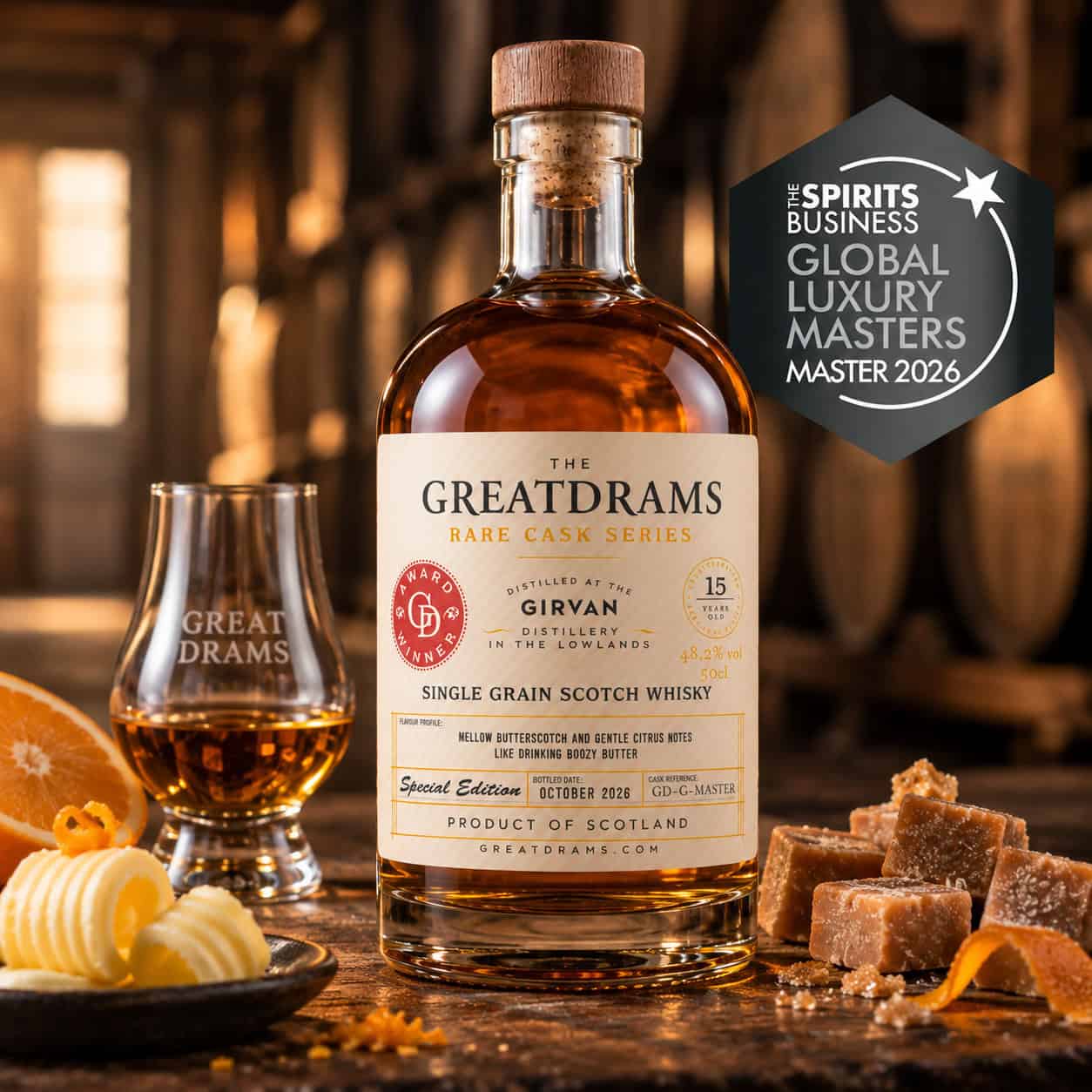
If you’d like to learn more about your favourite whiskies, or simply treat yourself to a dram or two in the process, head on over to GreatDrams.com and take a look at the diverse selection of unique whiskies we currently have in stock.
With an impressive selection of limited-edition, rare, and award-winning whisky, as well as heaps of whisky info on our blog, it’s the perfect spot for any whisky lovers out there.