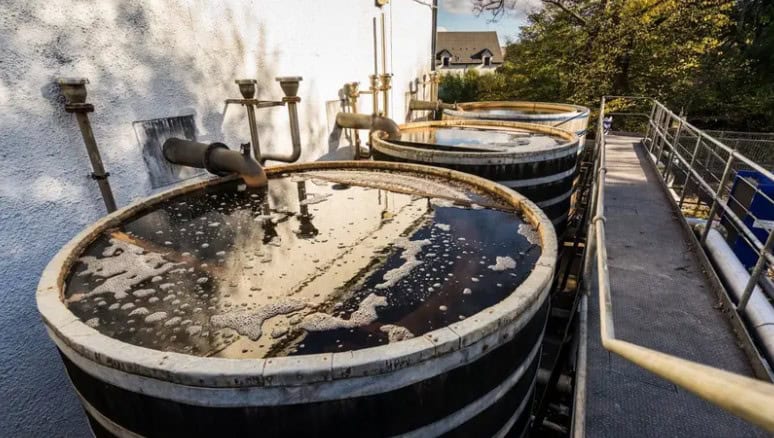
Why are Worm Tubs Far Less Common These Days?
So, why aren’t worm tubs the industry standard anymore? Well, there are a number of reasons for this. To begin with, they’re less efficient and not only cost more to operate, but they also require more energy, which is not great for the environment. Then of course, there’s the fact that the flavours, notes, and characteristics they impart into the whisky are not to everybody’s tastes. Finally, they require far more maintenance, especially as they’re more outdated and exposed to the Scottish elements. This takes time and costs more money, so from a business standpoint, you can see why they were gradually phased out.
Instead, shell and tube condensers are preferred by most whisky distilleries nowadays. Because worm tubs tend to cool the water vapour more rapidly, there is typically less contact with the copper, which gives the spirit a heavier, meatier body. Shell and tube condensers encourage greater levels of copper contact, which helps make the spirit lighter and creamier, with softer, more sweeter notes which are likely to appeal to a wider audience. They also cost less to run, require less maintenance, and are more eco-friendly.
Distilleries Still Using Worm Tubs
Although fewer distilleries use worm tub condensers these days, they’re not yet extinct. As more revived distilleries look to embrace whisky’s past, while merging it with its future, we could very well see worm tubs make a comeback, perhaps with more modern, updated, and energy efficient designs.
Here are a few distilleries which still famously use worm tubs.
Talisker
Talisker is, without question, the most famous distillery on the Isle of Skye. Granted, there are only two distilleries located there, but still.
One of the most recognised whisky brands in the world, all five of the stills located at the Talisker distillery on the Isle of Skye famously utilise worm tubs.
Talisker is well known for its heavy, meaty, and peaty flavour and characteristics and it’s safe to say that their worm tubs play an important role in this.
Ardnahoe
Islay malts are like no other malts produced anywhere else in Scotland. They’re heavy on the peat, smoke, earthy, coastal, and medicinal notes and the flavours and characteristics that worm tub condensers impart can work extremely well with these expressions.
This is one of the reasons why Islay’s Ardnahoe distillery still utilises them. In fact, as of this writing, Ardnahoe is the only distillery on the island that makes use of them. See what I mean about distilleries looking to honour whisky’s past and bring back more traditional methods? Ardnahoe is not yet a decade old, yet they’re embracing tradition and putting out exceptional drams as a result.
Benrinnes
Benrinnes is one of Speyside’s most iconic distilleries, and is one of our personal favs here at GreatDrams as well.
The distillery was founded back in 1826 and is well known for creating malts which are slightly more unique and uncharacteristic of a typical Speyside. Speyside drams are usually lighter, creamier, and fruitier. Benrinnes expressions tend to have a heavier body, with a richer mouthfeel and more sweet and savoury notes. Guess what? This is largely attributed to their use of worm tubs.
Rosebank
Rosebank is another distillery I’ve a huge soft spot for. In fact, I’ve written about this Falkirk distillery several times over the last couple of years, largely because it has such a fantastic story behind its reawakening in 2023.
Rosebank was originally closed in 1993, where it lay silent for almost three decades. Prior to that, they famously produced their whisky using worm tubs and a triple distillation method typically associated with Irish whiskey. Since the distillery was revived a few years ago, they produce their whisky in this exact same way.
I always find this interesting because worm tubs help to give whisky a heavier, richer, more savoury character. Triple distillation, however, helps to create lighter, creamier, smoother whiskies so combining both methods together almost seems counterproductive. But do you know something? It absolutely works as their Lowlands malts seem to strike the perfect balance between light and delicate and heavy and complex.
If you’d like to learn more about your favourite whiskies, or simply treat yourself to a dram or two in the process, head on over to GreatDrams.com and take a look at the diverse selection of unique whiskies we currently have in stock.
With an impressive selection of limited-edition, rare, and award-winning whisky, as well as heaps of whisky info on our blog, it’s the perfect spot for any whisky lovers out there.