




Last Updated: November 21, 2026
Quick Summary
The investment potential of rare whisky bottles rests on scarcity plus demand, and nothing else. Value depends on bottle rarity, brand perception, market demand and condition, with provenance the single biggest driver. Treat bottles as an illiquid collectible, not a savings account, and size any holding so a total loss on one bottle would be annoying rather than damaging.
- Rare whisky prices rose 40% over the year covered by the 2018 Knight Frank Luxury Investment Index.
- Rare Whisky 101’s 2026 assessment shows the market is now far more selective than it once was.
- Auction prices are not net returns: commission, fees, insurance and shipping all eat into any gain.
- Bottles are generally more liquid than casks, while casks offer longer-term upside.
- Confirm the bottle code, fill level, label print quality and capsule before any purchase.
Buying rare whisky? Read this firstGreatDrams bottles single casks and brokers whisky, with guidance to help you buy well.
Table of Contents
- Why Rare Whisky Bottles Still Appeal to Investors
- What Rare Whisky Bottle Value Actually Depends On
- Whisky Bottle Provenance: The Detail That Decides Everything
- Whisky Investment Risks Nobody Puts on the Label
- Whisky Bottles Versus Casks: Two Very Different Bets
- Building a Bottle-Buying Strategy With GreatDrams
- Frequently Asked Questions
Why Rare Whisky Bottles Still Appeal to Investors
The investment potential of rare whisky bottles rests on a simple, uncomfortable truth: scarcity plus demand, and nothing else. According to The CEO Magazine’s coverage of Knight Frank’s Luxury Investment Index, rare whisky prices rose 40% over the year covered by the 2018 index. That number did a lot of heavy lifting for the category, and plenty of people are still quoting it as if the market never changed.
The two are not always the same person, and the overlap is smaller than the sales patter suggests.
Here is the honest position. Rare whisky is an alternative investment with real historical performance, real collector demand and real price volatility. It is also illiquid, easy to get wrong and full of people selling certainty they do not have. Below, we break down how bottle value actually works, what provenance really means, and where the risks hide.
What Rare Whisky Bottle Value Actually Depends On
Rare whisky bottle value is not set by age alone, and it is not set by the distillery’s marketing budget. It comes down to four things, and the first is supply.
Bottle rarity is the starting point. Limited editions, old releases and bottles from silent distilleries carry a premium because no more are being made. A closed distillery’s last casks are finite, and collectors know it. Brand perception matters just as much: blue-chip distilleries hold their standing through cycles, while fashionable names can cool quickly. Market demand does the rest, and demand shifts with market conditions, auction sentiment and how many similar bottles appear at once. The fourth factor is condition, which we will come to.
The auction sales data tracked across the fine and rare market shows how unevenly prices move between bottles that look similar on paper. That is the point. Two bottles of the same expression, same year, can sell for very different sums depending on what a buyer can verify about each one.
Whisky Bottle Provenance: The Detail That Decides Everything
Whisky bottle provenance is the documented history of a bottle: where it came from, how it was stored, and whether it is what it claims to be. It is the single biggest driver of rare whisky bottle value, and the thing most buyers check last.
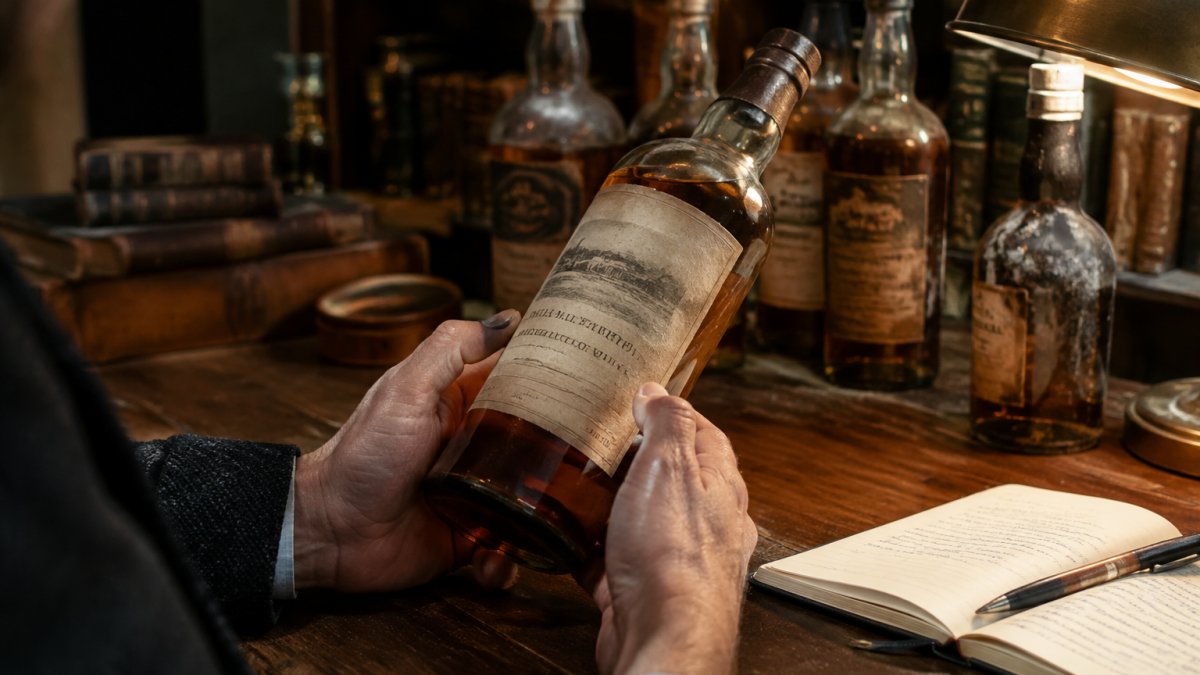
Counterfeit bottles exist, and they are good enough to fool a casual buyer. Authenticity checks start with the bottle code, the label print quality, the capsule and the fill level. Storage matters too: a bottle kept upright in a cool, dark place for twenty years is worth more than one that sat in a sunny kitchen. A low fill level tells its own story about evaporation and seal integrity.
For anyone building a collection properly, our guide to building a whisky collection covers storage, condition and record-keeping in more detail than we can fit here. Keep receipts. Photograph everything. Provenance is only worth what you can prove.
Whisky Investment Risks Nobody Puts on the Label
Whisky investment risks are real, and the first one is price volatility. Past performance does not guarantee anything, and Rare Whisky 101’s 2026 assessment makes clear the market is now far more selective. Rapid appreciation across almost any bottle is no longer the norm. The 2018 index figure that launched a thousand sales decks has not been repeated across the board since, and anyone quoting it as a baseline is selling you something.
The second risk is liquidity, and this is where the headline numbers fall apart. Auction prices are not net returns. Commission, seller’s fees, loss and damage cover, shipping and the gap between hammer price and what actually lands in your account all eat into the figure. A bottle that “went up 30%” on paper can net you considerably less once selling costs are deducted, and if you bought at retail with VAT on top, the real gain may be modest or negative.
Auction houses vary, so check their fee schedules directly. Auction commission, lot fees, insurance, storage, shipping to the saleroom and the original purchase price including VAT all count against any gain. Work that sum before you buy, not after you sell. If the arithmetic only works on the rosiest appreciation assumption, it does not work.
The third risk is assessment. the Scotch Whisky Association’s 2025 cask investment guidance advises potential investors to assess sales offers carefully, conduct due diligence and take appropriate advice. That guidance concerns casks, but the principle applies to bottles just as well. A glossy provenance folder is not the same as a verifiable chain of ownership.
The fourth risk is suitability, and it is the one nobody wants to hear. Rare bottles are an illiquid collectible, not a savings account. Money you might need in a year, or that forms the bulk of your savings, has no business in them. A sensible approach is to treat bottles as a small satellite holding alongside conventional assets, sized so that a total loss on any single bottle would be annoying rather than damaging. Diversify across distilleries, eras and price points rather than concentrating everything in one fashionable name.
Watch out: the biggest mistake we see is buying on the story rather than the evidence. A great backstory about a lost distillery means nothing if the bottle cannot be authenticated or resold, and the story is usually the reason the price is high in the first place.
Whisky Bottles Versus Casks: Two Very Different Bets
Bottles and casks are not competing versions of the same investment. They are different bets with different time horizons, and confusing them is how people end up disappointed.
| Route | Liquidity | Holding Period | Key Advantage | Main Risk |
|---|---|---|---|---|
| Rare bottles | Higher, resale possible | Flexible | Tangible, easy to store | Condition and authenticity |
| Casks | Lower, harder to exit | Typically long | Potential long-term upside | Illiquidity and due diligence |
Bottles are generally more liquid than casks, while casks offer longer-term upside. Cask ownership suits patient capital and requires serious due diligence on the cask’s existence, history and paperwork. Bottles suit collectors who want something they can hold, display and sell without waiting years. If you are weighing the cask route, our guide to investing in whisky casks sets out how it actually works.
Building a Bottle-Buying Strategy With GreatDrams
A sensible strategy starts with a holding period and an exit in mind, not a shopping list. Decide whether you are collecting, drinking or investing, because the three want different bottles. Then buy fewer, better bottles with documented provenance, and keep the paperwork as carefully as the whisky.
Before any purchase, run a repeatable check. Confirm the bottle code against the label and capsule where the producer publishes one. Inspect fill level, label print quality and capsule condition. Photograph the bottle, the code and the packaging before you store it. Ask the seller for the original receipt or a documented chain of ownership, and be wary of a bargain that comes with a story but no paper. That checklist will not catch every fake, but it filters out most of the lazy ones.
Exit planning matters as much as entry. Resale through auction means consigning, waiting for a sale date and then waiting again for settlement, so plan on a timescale measured in weeks or months rather than days. Private sales can be quicker but carry more counterparty risk. Demand and transaction costs both affect the achievable price, so build the fee drag into your expectations from day one. If you cannot name where and roughly when you would sell, you are collecting, not investing, and that is fine as long as you know which one you are doing.
Our wider whisky investment primer covers portfolio diversification and asset management basics if you want the full picture. Beyond that, remember that GreatDrams is an independent bottler and cask brokerage. We source single casks and limited edition whisky, host tastings, and offer brand NPD and consulting on product development. We do not promise returns, and we would be wary of anyone who does.
If you are ready to talk through what suits your budget and goals, our team can help you enquire about sourcing casks and bottlings directly.
Judging rare whisky bottles investment potential takes patience and a sceptical eye, and most buyers learn that the hard way. If you would rather get it right from the start, GreatDrams can guide you through limited-edition bottlings, single cask releases and cask brokerage, with tastings that make the whole category less intimidating. Get started with GreatDrams and buy with your eyes open.
Frequently Asked Questions
Can you actually make money investing in rare whisky bottles?
Some people have, but not reliably. Knight Frank’s Luxury Investment Index reported a 40% rise in rare whisky prices over the year covered by its 2018 index, and other reported figures put ten-year gains far higher. Those are historical numbers, not forecasts. Rare Whisky 101 noted in 2026 that the market is now more selective, with rapid appreciation no longer available across almost any bottle. Treat rare whisky bottles as a specialist passion that may hold value, not a guaranteed return.
How do you check the provenance of a rare whisky bottle before buying?
Start with the bottle code and label printing, which should match the stated bottling year, then check fill level, capsule condition and any original packaging. Ask for the full ownership history and any auction or retail paperwork. Cross-reference the bottle against known release records. Whisky bottle provenance is where most deals fall apart, so if a seller cannot explain where a bottle came from, walk away rather than talk yourself into it.
Are whisky bottles or casks the better investment?
They suit different people. Bottles are generally more liquid than casks, while casks offer longer-term upside. Bottles can be sold at auction relatively quickly, though selling costs and fees eat into the headline price. Casks tie up capital for years and bring storage, insurance and bottling costs. Investors are generally advised to assess offers carefully and conduct due diligence before committing.
What are the biggest risks with rare whisky bottles?
Counterfeit bottles, poor storage, weak liquidity and shifting market demand are the main ones. Market fluctuations are a recognised risk. Net returns also matter: auction commission, shipping and insurance can shrink a gain considerably. Buy from sources that can prove authenticity, store bottles upright in a cool, dark place, and plan your exit before you buy rather than after.







-

GreatDrams Whisky Pouch 50ml Multiple Options Available
Price range: £8.00 through £20.00