


Last Updated: November 19, 2026
Quick Summary
Effective whisky education for craft alcohol retail means giving staff a short, jargon-free grounding in flavour, labels and recommendation language rather than certificates or dense manuals. Build a four-week learning pathway, run brief tastings, and back it with plain-language shelf talkers and themed in-store events. Measure the results so training keeps its place on the calendar.
- Run a four-week pathway covering flavour basics, labels, recommendation practice and responsible retail.
- Group tasting descriptors into recognisable families such as orchard fruit, citrus, dried fruit, sweetness, cereal and smoke.
- Write shelf talkers in three plain lines: what it tastes like, who it suits and one honest detail.
- Keep tasting pours small, with water and plain crackers, and speak for no more than three minutes per dram.
- Track basket value, staff pick sales and event return rates to prove the training works.
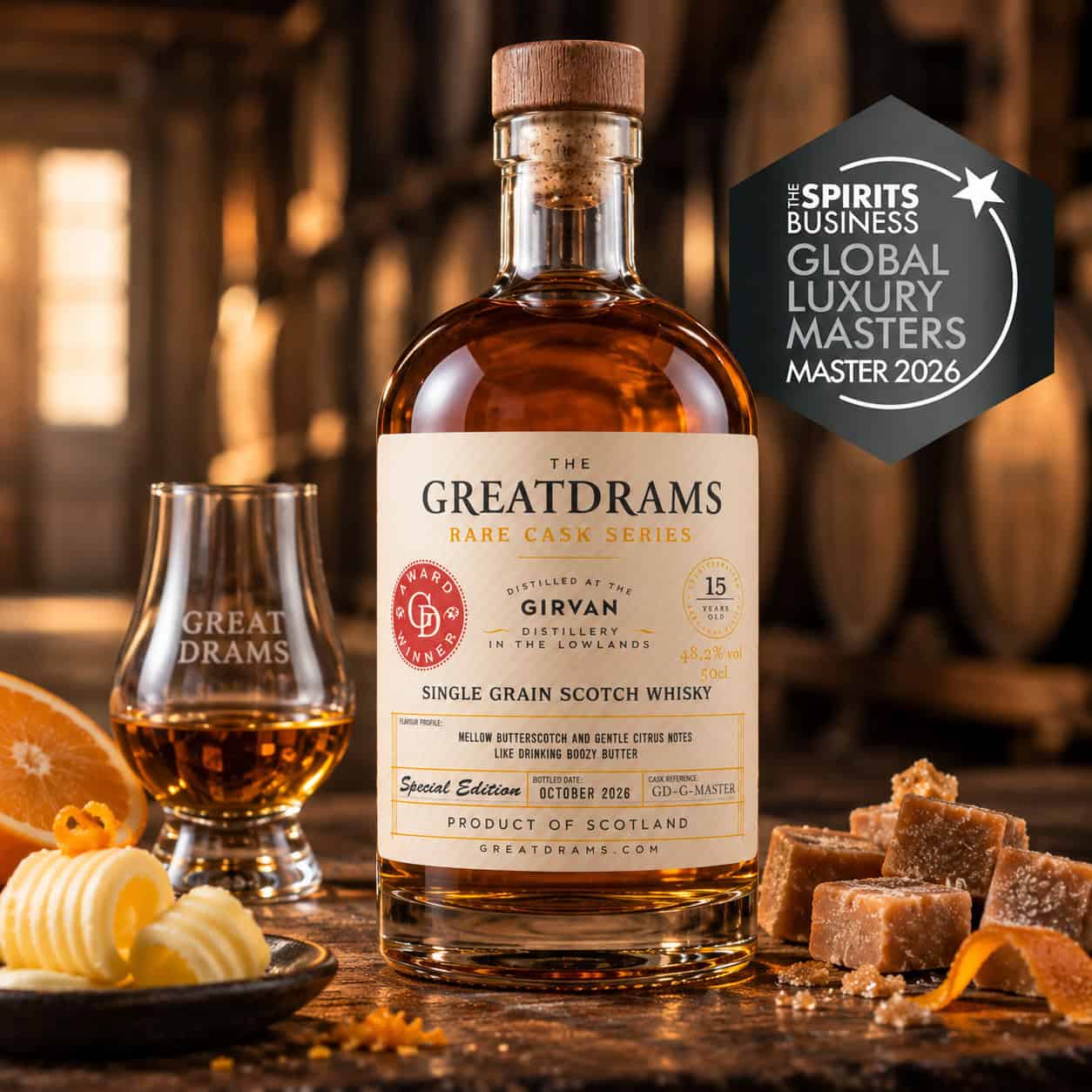
Ready to make whisky click for your customers?GreatDrams hosts tastings and bottles limited-edition whiskies that make learning enjoyable.
Table of Contents
- Why Whisky Education Is the Missing Piece in Craft Retail
- Whisky Staff Training That Builds Real Confidence
- A Whisky Tasting Guide for Beginners: Jargon-Free Flavour
- Decoding the Label: Whisky Categories and What They Mean
- Whisky Shelf Talkers That Actually Help Customers Choose
- Whisky Tasting Event Ideas for Independent Retailers
- Responsible Retail: Age Verification and Sensible Drinking
- Measuring Whether Your Whisky Education Works
- Book a Whisky Tasting to Bring Education to Life
- Frequently Asked Questions
Why Whisky Education Is the Missing Piece in Craft Retail
Walk into most independent bottle shops and you will hear the same quiet confession at the counter: “I don’t really know what I’m looking at.” That is the gap educational resources to demystify whisky for craft alcohol retail should be closing, and it is where GreatDrams has spent years working out what actually helps. Our guide on how to learn about whisky without the snobbery sets out that accessible approach for retail teams. The opportunity is real. According to American Craft Spirits Association data on distillery sales, distillery-based sales grew from 14% of craft spirits sales in 2015 to 26% in 2025, a shift that puts education and experience at the heart of the transaction rather than at the edges.
Research from Emerald Insight’s study on storytelling in craft spirits distilleries found that craft producers use storytelling as a core part of the brand experience to engage consumers and demystify production. Retailers can borrow that same instinct. A shelf of unfamiliar bottles stops being intimidating the moment someone explains what is inside them.
Below, we break down the training, tasting language, labelling knowledge and in-store tools that turn a nervous browser into a confident buyer.
Whisky Staff Training That Builds Real Confidence
Most whisky staff training fails because it starts with facts instead of conversations. The person behind the counter does not need to memorise every distillery in Speyside. They need to ask three good questions and translate the answer into a bottle.
The lean approach works best. Research from the University of Denver’s analysis of small-firm constraints notes that smaller craft producers often struggle to implement complex educational frameworks because of limited capital and personnel, which points toward high-impact storytelling rather than resource-heavy programmes. The same applies to independent retailers.
Start with what your team already does well. Build a short internal glossary, run fortnightly ten-minute tastings before opening, and let staff take home a miniature to taste properly with dinner. Confidence grows from familiarity, not from a certificate on the wall.
A Four-Week Learning Pathway for Retail Teams
Here is a structure we would use to get a small team from hesitant to helpful in a month. Each week needs roughly one hour of group time plus a little homework.
| Week | Focus | Group Session | Homework | Expected Outcome |
|---|---|---|---|---|
| 1 | Flavour basics | Taste three whiskies blind, describe without jargon | Write five words for each | Staff stop reaching for tasting-note clichés |
| 2 | Categories and labels | Walk through age statements, regions, cask types | Match ten bottles to categories | Staff can explain a label in plain English |
| 3 | Recommendation practice | Role-play three customer scenarios | Shadow a colleague for an hour | Staff can recommend with a reason |
| 4 | Responsible retail and events | Age verification, pacing, tasting setup | Plan a mini tasting | Team can host a small in-store event |
Keep the sessions short. A team that dreads training will not absorb it.
A Whisky Tasting Guide for Beginners: Jargon-Free Flavour
The best beginner tasting guide removes pressure rather than adding knowledge. Forget “notes of damp leather and pencil shavings” for now. Most people who say they do not like whisky have simply never been given the vocabulary to describe what they are tasting, and that is a retail problem as much as a drinker’s problem.
Start with four questions: is it sweet or dry, light or full, soft or punchy, and do you want another sip? Those four answers are a useful way to place a dram on a simple map, and they are good questions for staff to ask customers at the counter.
Whisky education works best when it is built on comparison. Pour two drams side by side and the differences explain themselves. A Lowland single malt next to a heavily sherried Speyside shows what cask and region actually do to a spirit far more vividly than any chart. The same principle applies in the shop: keep two open bottles of contrasting style behind the counter and offer a small taste when a customer is torn between them.
Build a shared flavour vocabulary the whole team can use. Rather than reaching for specialist terms, group descriptors into families that customers recognise: orchard fruit (apple, pear, peach), citrus (lemon, orange peel), dried fruit (raisin, sultana, fig), sweetness (honey, vanilla, caramel), cereal (malt, biscuit, porridge), and smoke or peat. A short laminated card with these families on it does more for staff confidence than a 40-page tasting manual.
Add a splash of water. It is not cheating, and it opens up aromas that high strength can mask. A few drops in a cask strength dram can transform a closed, prickly nose into something generous. For readers who want to go further, our guide on how to taste whisky without it burning covers the practical side of getting past the initial alcohol heat.
Taste in small measures, take notes you will actually reread, and resist the urge to grade every dram out of ten. Beginners learn faster when they are curious rather than judgmental. The same goes for staff: a team that feels judged for saying “it smells like a bakery” will stop offering opinions, and a shop without opinions is just a shelf.
Watch out: the biggest barrier to beginner tasting is portion size. A generous pour dulls the palate within minutes, so keep samples to a small measure and provide water and plain crackers between drams.
Decoding the Label: Whisky Categories and What They Mean
A whisky label is a legal document wearing a marketing hat, and teaching customers to read it is one of the highest-value things a retailer can do. The key distinction is between Scotch whisky, Irish whiskey and other categories, each governed by its own rules on ingredients, distillation strength and minimum maturation.
Within Scotch, single malt means one distillery and malted barley only. Single grain can include other cereals and is often made at a grain distillery. Blended Scotch combines malt and grain whisky, and blended malt mixes malts from more than one distillery. Irish whiskey brings its own vocabulary, including single pot still, which uses a mash of malted and unmalted barley.
Cask type matters just as much as category. A first-fill sherry butt and a refill bourbon barrel will push the same spirit in wildly different directions. Our page on decoding whisky flavour profiles connects those choices to what a customer actually tastes. For shoppers still finding their feet, this guide to choosing a Scotch whisky region as a beginner turns category knowledge into a confident recommendation.
Whisky Shelf Talkers That Actually Help Customers Choose
Most shelf talkers are decorative wallpaper. A good one answers the question the customer is too polite to ask: “What is this like, and who is it for?” That is the gap most retail education misses, and it is where a simple recommendation framework earns its keep.
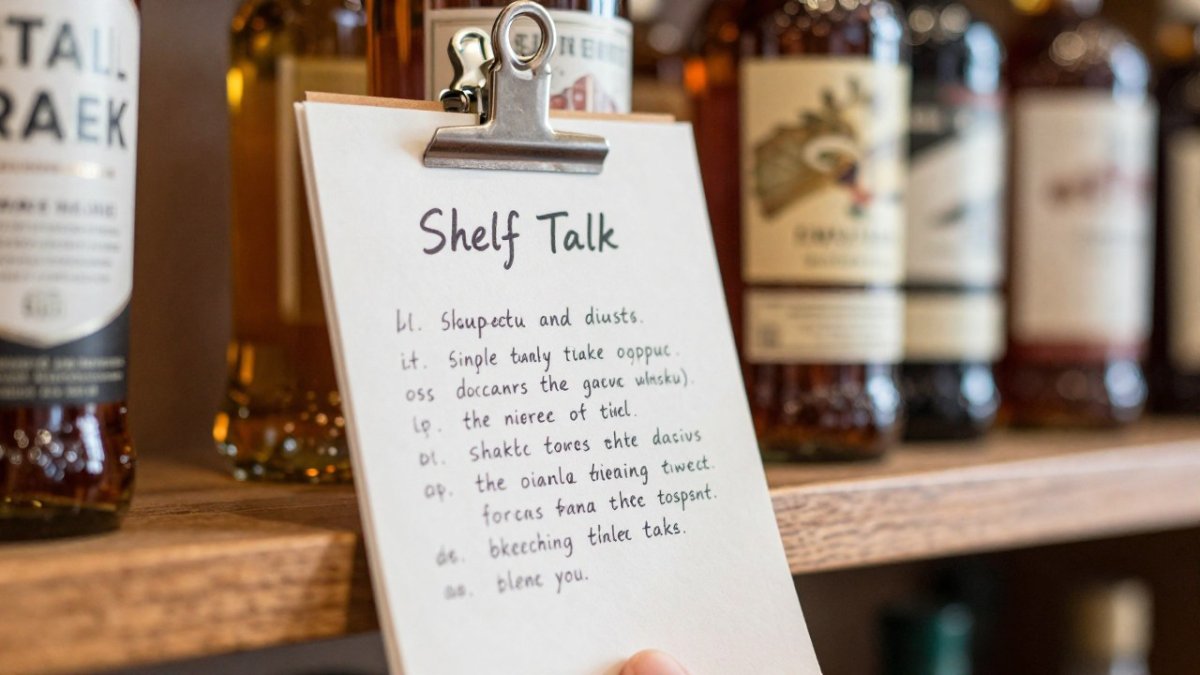
Write shelf talkers in plain language and keep them short. Three lines is plenty: what it tastes like, who it suits, and one honest detail. “Soft, honeyed and gentle. Good first single malt. No peat, no smoke.” That sells a bottle. “A symphony of orchard fruits with a whisper of sea spray” does not.
Build the card around a decision tree rather than a description. Ask yourself the four questions a customer is actually running through: do they want smoke or no smoke, sweet or dry, light or full, and what is the occasion? A card that says “No smoke, honeyed, easy sipping, good gift under a certain age” does the work of a staff member on a busy Saturday.
Handwritten cards outperform printed ones in most independents because they signal that a human actually chose the bottle. Update them when the range changes, and never let a card outlive the whisky it describes. A card for a bottle that sold out three weeks ago is worse than no card at all, because it teaches customers that the shelf cannot be trusted.
Give every card a job. Some should drive discovery (“if you like this, try this”), some should justify a step up in price (“same distillery, older expression, richer cask”), and some should answer a common objection (“yes, it is peated, but gently so”). Rotate them so the shelf does not become visual noise.
Measure whether they work. A simple tally of which bottles move after a card goes up, kept for a month, tells you more than any theory. If a card does not shift a bottle, rewrite it or move it. The best shelf talkers are the ones a customer quotes back to you at the counter.
Watch out: the most common mistake is writing a card for the staff rather than the customer. If it uses a term the average shopper would not recognise, it is a label, not a shelf talker.
Whisky Tasting Event Ideas for Independent Retailers
Tasting events are the most effective education a shop can offer, provided they are built around a clear theme rather than a random lineup. Research from MDPI’s study on experience economy in craft beverage tourism shows that applying the experience economy framework in craft beverage settings significantly enhances consumer engagement and product discovery. A themed tasting is that framework in miniature.
Strong themes include “same distillery, three casks”, “peat versus no peat”, or “whisky under a certain age that punches above its weight”. Keep pours small, provide water and plain crackers, and talk for no more than three minutes before each dram.
Watch out: the most common mistake is over-pouring to seem generous. Guests stop tasting properly after the third large measure, and nobody learns anything. Small measures, plenty of water and a clear finish time serve everyone better.
Responsible Retail: Age Verification and Sensible Drinking
Education and responsibility are the same conversation in a whisky shop. Every recommendation should come with context: strength, serving size, and the reminder that a dram is a measure, not a refill.
Age verification is non-negotiable. Retailers must not sell alcohol to anyone under 18, and it is good practice to operate a Challenge 25 policy, asking anyone who looks under 25 for ID. Staff should be trained to ask confidently and without apology, and refusals should be logged. The UK government guidance on age-restricted sales sets out the framework retailers work within.
Sensible drinking guidance from the UK Chief Medical Officers’ low-risk drinking guidelines recommends no more than 14 units a week for adults, spread across several days. Knowing those numbers helps staff answer questions honestly rather than dodging them.
Measuring Whether Your Whisky Education Works
Training that is never measured quietly disappears. Track a handful of simple indicators rather than building a complicated dashboard.
- Average basket value on whisky lines, collected before and after training
- Number of bottles sold from the “staff pick” shelf
- Conversion rate on tasting event attendees returning within 60 days
- Staff confidence scores from a short quarterly self-assessment
- Customer questions logged at the counter, and whether staff could answer them
If the numbers do not move, the training was probably too abstract. If they do, you have a case for investing more time in it.
Book a Whisky Tasting to Bring Education to Life
The theory only takes you so far. You can see how a real club runs at Poynton Whisky Club, which meets twice a month in association with GreatDrams. The moment a customer tastes two drams side by side and hears why they differ, the whole category clicks into place, and that is where GreatDrams does its best work. GreatDrams offers bespoke whisky tastings for teams and groups who want something more memorable than another away day. Our limited edition whisky releases give retailers and drinkers alike something genuinely worth talking about, from an independent bottler recognised at international spirits competitions. Get started with GreatDrams and give your customers a dram they will actually remember.
The gap between a nervous browser and a confident buyer is usually one good conversation. Build the training, write the shelf talkers, run the tastings, and the bottles will do the rest.
Frequently Asked Questions
How can retailers explain whisky to beginners without overwhelming them?
Start with what the customer already drinks, not with production detail. Ask whether they enjoy cider, wine or cocktails, then match texture and sweetness rather than region. A Lowland or Irish single malt is often an easier entry than a heavily peated Islay dram. Keep the first conversation to three facts: what it is, how it tastes and what it costs. Save cask types and distilling methods for the second visit, when the customer comes back curious.
What should whisky staff training cover first?
Cover the legal basics and the flavour language before anything else. Staff need to know age verification rules, how to describe a dram without jargon and how to handle a customer who says they do not like whisky. From there, add category differences between single malt, blended and single pot still, then a short tasting session so the team has actually tried what they are selling. Product knowledge follows confidence, not the other way round.
How long should a whisky tasting session last?
Ninety minutes suits most retail tastings: long enough for four or five drams, short enough that attention holds. Allow ten minutes for arrival and a welcome pour, then roughly twelve minutes per whisky with conversation built in. If you are hosting a corporate or ticketed event, two hours gives room for a proper walkthrough of production and a longer finish. Always build in time for questions and a soft close rather than rushing the last sample.
What is the difference between single malt and blended whisky?
Single malt comes from one distillery and is made entirely from malted barley. Blended whisky combines malt and grain whiskies, often from several distilleries, to create a consistent house style. Neither is inherently better. Single malt shows distillery character more directly, while blends are built for balance and drinkability. For a beginner, the distinction matters less than whether the liquid suits their palate, so let them taste both before deciding.
How can retailers describe whisky flavours without using jargon?
Use everyday reference points rather than tasting-note language. Instead of congener development or ester profiles, say it tastes like apple crumble, dark chocolate or a campfire. Compare texture to things people know: creamy, syrupy, drying. Ask the customer what they taste and build on their words rather than correcting them. A shelf talker that says ‘tastes like honey on toast’ sells more bottles than one that lists three obscure fruits.
What whisky information should go on a shelf talker?
Keep it to four or five lines: what the whisky is, one sentence on flavour in plain language, a suggested serve and a food pairing if relevant. Add the ABV and region only if they help the decision. Avoid scores, awards without context and long tasting notes. The best shelf talkers answer the question a customer is too shy to ask out loud, so write them as if you are standing beside the shelf explaining it.






-

GreatDrams Whisky Pouch 50ml Multiple Options Available
Price range: £8.00 through £20.00