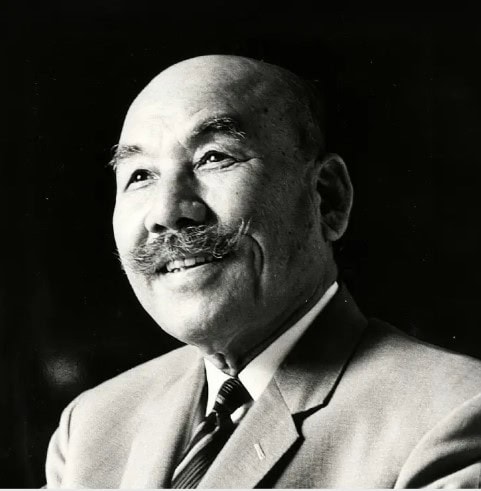
He studied brewing at Osaka Technical High School, picking up a major at the age of 22. He would go on to work at a Japanese distillery called the Settsu Shozu Company. He took to the job like a duck to water and was keen to learn more about the intricacies of distilling. His wish was granted a couple of years later when he was sent to Scotland to learn more about the art of whisky making.
Life in Scotland
In 1919, Masataka arrived in Scotland and quickly settled in to the Scottish way of life. He would enrol at Glasgow University, majoring in Chemistry.
Before long, he landed himself an apprenticeship at the Longmorn Distillery in Speyside. It was here that he really began to appreciate just how special Scotch can be. A few months later, he would once again begin an apprenticeship at another distillery, this time at James Calder where he would learn all about Coffey grain production. His knowledge of Coffey stills would come in very handy decades down the line (more on that later).
While in Scotland, he would meet Jessie Roberta (Rita) Cowan, with the two quickly falling in love. By the summer of 1920 the two were married, despite protests from both their families. I’ve kept this section brief because I’ve covered it in a previous blog looking at Rita’s life. Feel free to take a look at that when you finish here.
Not long after getting married, Masataka began working as an apprentice at Campbeltown’s Hazelburn Distillery. Here, he would learn all about the art of blending.
As the months passed by, he soaked up whisky knowledge like a sponge. A couple of years later, his time in Scotland drew to a close and he, along with his wife, would return to Japan…
The Birth of Nikka Japanese Whisky
After returning to Japan, Masataka was keen to share his newfound whisky knowledge with his employers.
Initially, the Settsu Shuzo Company sent him to Scotland as they had aspirations of launching their own whisky. While he was away, however, they’d clearly lost interest because they decided to abandon the whisky project. Money, or lack thereof, also likely played a role but when doesn’t it?
Needless to say, Masataka was disgruntled by this (and rightly so) and decided to leave the company in 1922. A year later, he began working for Shinjiro Torii at the Kotobukiya Group (later renamed Suntory) on a 10-year contract. Here, because of his experience in Scotland, he would oversee the construction of Japan’s first whisky distillery, which they called Yamazaki Distillery. By 1924, the distillery was complete. Japan’s first whisky was now within reach.
Masataka and Torii were eager to get the distillery up and running and by 1929 ‘Shirofuda’ the world’s first authentic Japanese whisky was launched. Now, as exciting as this was, the whisky received mixed reviews, as it was deemed a little too peaty and smoky for Japanese palates.
Once his contract came to an end, Masataka decided to chase his dreams of starting his own whisky business. After words of encouragement from Rita, he left his position and decided to go it alone, with the goal of building his very own distillery.
In 1934, Masataka constructed his first distillery, which he named ‘Yoichi’. He chose the island of Hokkaido as he felt the climate and surroundings were very similar to those found back in the Scottish Highlands. The cool climate, combined with the salty maritime air would prove ideal for emulating the drams he’d worked with back in Scotland. It even had its own peat bogs, which he planned to capitalise upon, despite peat being synonymous with Islay expressions rather than Highland drams.
By now, he had been working with and around whisky for close to a decade and a half. In 1934 he would start his own whisky company ‘Dai Nippon Kaju Co’ which meant ‘The Great Japanese Juice Company’. As the name implies, the business originally produced apple juice made from local apples as the whisky distilled and matured.
1940 proved a very exciting time for Masataka as he would launch the world’s first ‘Nikka’ whisky. In 1952, the business name would officially be changed to ‘The Nikka Whisky Distilling Co’. The brand quickly grew and earned a reputation for exceptional whisky.
In 1961, Masataka’s beloved wife Rita sadly passed away aged 64. He was devastated by her death and would throw himself into his work to help him cope. He focussed all of his energy into growing Nikka Whisky. One year later, he launched Nikka Blended Whisky in her honour. It too was an enormous hit.
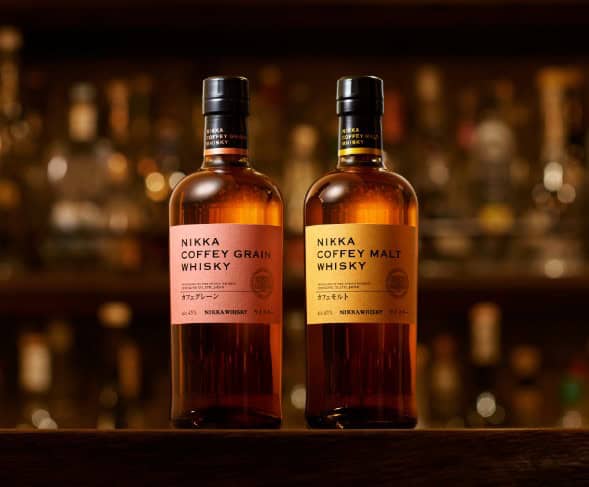
By the 1960s, Nikka Japanese Whisky was now an established brand and was proving very popular. Masataka would invest a lot of time, effort, and money into growing the brand. In 1966, inspired by his time at James Calder, he had Japan’s first two Coffey stills imported from Scotland.
By 1969, Nikka proved so fruitful, that Masataka would have another distillery constructed. This one he named the ‘Miyagikyo Distillery’ which he had built on the gorgeous island of Honshu.